

When you are moving polymer across borders, industrial-grade packaging helps protect your material throughout the journey. Your order may be loaded, unloaded, stacked, moved by forklift, packed into a container, and exposed to changing temperatures and humidity before it reaches your warehouse. Good packaging helps keep the material secure, clean, and in good condition when it arrives.
For importers, overseas buyers, international distributors, wholesalers, and buying agents, that can mean fewer handling problems and better protection from origin to destination. At VERTEX Supply Networks, packaging fits into a wider approach to sourcing, quality control, and international supply, so the shipment is planned around the journey it actually has to make.
1. Start With the Right Polymer Packaging
There is no magic package that works for every polymer. The right option depends on the material, order size, moisture sensitivity, handling method, storage conditions, and shipping route.
Common choices include:
- 25 kg bags: Practical for smaller orders and manual handling.
- FIBC bulk bags: Useful for large quantities of polymer granules and powders.
- Octabin containers: A good option when shape and stacking stability matter.
- Bulk liners: Useful for high-volume loading and direct discharge.
- Drums: Suitable for certain additives or regulated materials.
The goal is simple: use industrial-grade packaging that protects the polymer without making loading, unloading, storage, or delivery unnecessarily difficult.
2. Use FIBC Bulk Bags for Large Orders
FIBC bulk bags, often called jumbo bags, are flexible woven polypropylene containers used for many bulk industrial materials. They can hold large quantities while remaining practical for forklift handling and container loading.
They can work well for:
- Polymer granules and pellets
- Industrial powders
- High-volume export orders
- Gravity transloading
- Containerized sea freight
The bag is only one part of the system. Its lifting loops, stitching, liner, filling method, and discharge design should all match the material and handling process. Choosing the right industrial-grade packaging also helps make bulk handling more practical for export orders.
You can learn more about VERTEX’s Fiber & Polymer Import/Export service and its approach to industrial material supply.
3. Choose Octabins When Stability Matters
An octabin has a rigid corrugated outer body with an inner liner. Unlike a flexible bulk bag, it keeps its shape more easily during storage and transport.
Octabins can be useful when you need:
- Better stacking stability
- More structured warehouse storage
- Added resistance to compression
- A firm outer package for export
FIBC vs Octabin for Polymer Export
Think of an FIBC as the flexible workhorse and an octabin as the more structured option. FIBCs can be convenient for lifting and bulk handling, while octabins may be a better fit when stacking and shape retention are priorities.

4. Add Moisture Barrier Liners for Sensitive Resins
Moisture is a major concern when transporting hygroscopic polymers. Moisture barrier liners help limit humidity entering the package and can provide important protection during long storage and transit periods.
For materials such as PET and nylon, consider:
- Moisture sensitivity
- Transit time
- Climate along the shipping route
- Liner material and seal quality
- Storage conditions after arrival
If you are wondering how to protect polymer granules during ocean freight, moisture control should be planned before the container is packed, not after a problem appears.
5. Use Desiccants When Extra Moisture Control Is Needed
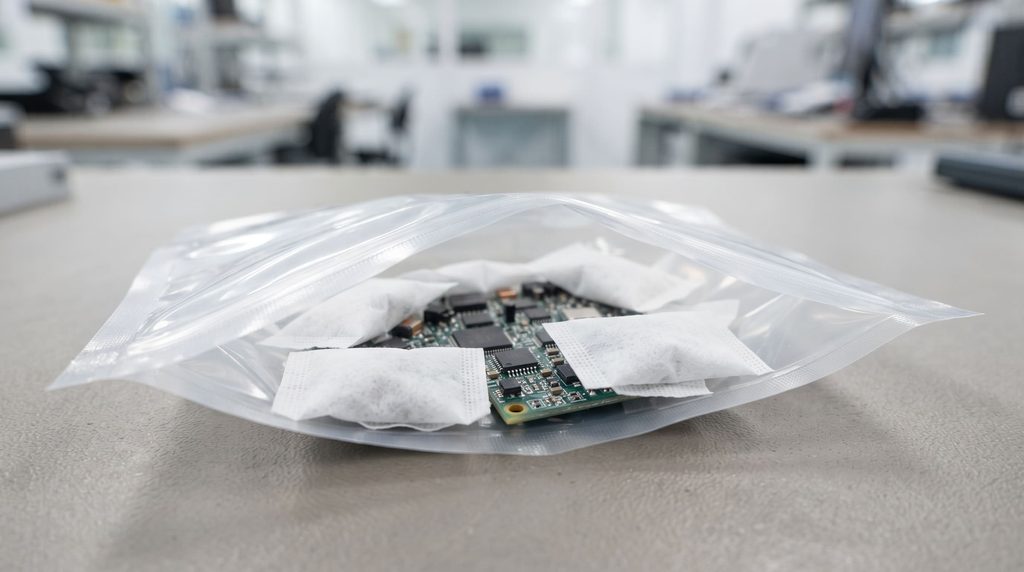
A suitable liner creates a barrier, while desiccant use in bulk polymer packaging provides another way to control residual humidity inside the package.
This can be useful during long international journeys or when temperature changes may create condensation. Still, desiccants should not be treated as a one-size-fits-all solution. Their use depends on the material, packaging design, and shipment conditions.
6. Stabilize Pallets Before They Leave the Warehouse
Even a strong bag can become a problem if the pallet is poorly secured. Road transport, port handling, forklift movement, vibration, and sudden braking can all make a load shift.
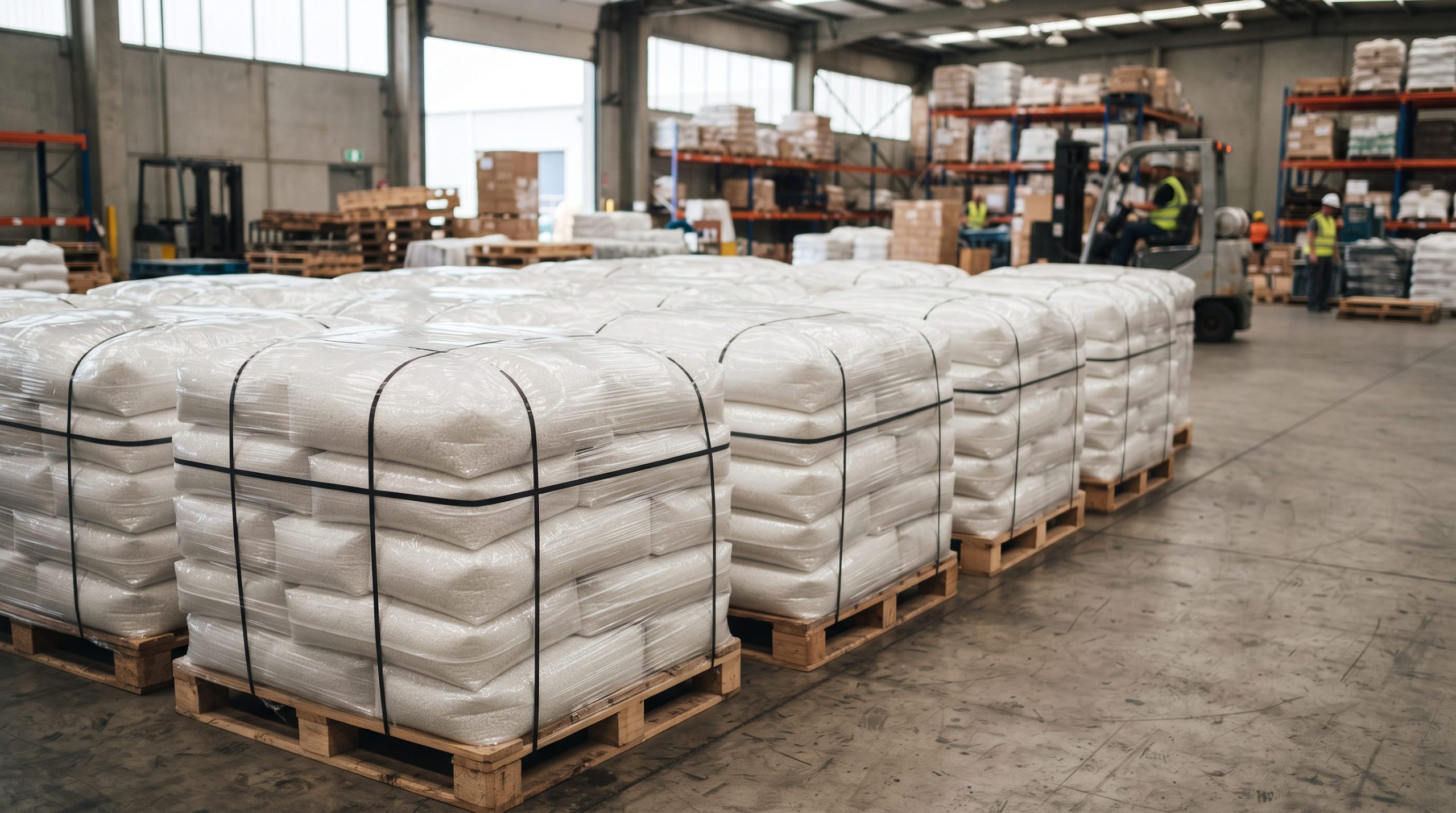
Industrial stretch wrap for palletized resin shipments helps keep bags or cartons together as one stable unit. Depending on the load, you may also use:
- Stretch film
- Strapping
- Anti-slip sheets
- Edge protectors
- Corner boards
This is also where cargo shrink wrap for polymer pallet security can help limit dust and unwanted exposure during handling.
7. Protect Corners and Edges
Packaging damage often starts where pressure is concentrated. Heavy-duty corner boards and edge protectors spread strap pressure and help reduce crushing and abrasion around pallet corners.
They are simple, inexpensive additions, but they can make a noticeable difference when pallets are tightly secured or handled several times during transit.

8. Consider Anti-Static Packaging for Sensitive Materials
Some polymer powders and fine materials can build static during filling, pneumatic movement, and dry handling. In these situations, anti-static bulk bags for polymer powders may help manage electrostatic risks.
The packaging should match the polymer, equipment, handling environment, and relevant safety requirements. When static is a concern, it is better to confirm the correct packaging specification than to guess.
9. Check Whether UN-Certified Packaging Is Required
Not every polymer shipment needs UN-certified packaging. If the material is not classified as dangerous goods, suitable industrial packaging may be enough.
However, certain additives and chemical materials can have different transport requirements. Where applicable, UN-certified drums for hazardous polymer additives or other approved packaging may be required.
Always check the product classification, safety data sheet, destination rules, and transport requirements before shipping.

10. Build Packaging Around the Full Supply Chain
Good packaging decisions start with a few straightforward questions:
- How much material are you shipping?
- Will it travel by sea, road, air, or several modes?
- Is the material moisture-sensitive?
- How will it be loaded and discharged?
- Will it be stored before production?
- Does the destination have specific packaging or transport requirements?
Packaging should support the whole journey, from the supplier’s facility to your warehouse or production line. The right industrial-grade packaging should fit the product, route, handling method, and storage needs. VERTEX’s Fiber & Polymer Import/Export information explains how sourcing, quality assurance, and international supply can work together.
FAQs About Bulk Polymer Packaging
What types of packaging are best for shipping bulk polymer resins?
FIBCs, octabins, and multi-wall bags with suitable liners are common options for dry polymer granules and powders. The best choice depends on volume, material properties, handling, and transport conditions.
How do moisture barrier liners protect polymer shipments?
They help reduce humidity entering the package and are particularly useful for moisture-sensitive resins. Liner selection should match the polymer and expected transit conditions.
What is the difference between FIBC bulk bags and octabins?
FIBCs are flexible woven bags designed for bulk handling, while octabins have a more rigid outer structure. The choice depends mainly on handling, stacking, storage, and transport requirements.
Why are desiccants used in bulk polymer bags?
Desiccants absorb residual moisture within the packaging environment. They can provide additional protection during long transit when appropriate for the material and packaging system.
How does stretch wrap stabilize palletized polymer shipments?
Stretch wrap helps hold bags or cartons together as a stable pallet unit, reducing shifting and movement during handling and transport.
Final Takeaway
Industrial-grade packaging is much more than a wrapper around a polymer order. It supports product protection, cleaner handling, storage stability, and smoother international logistics.
FIBC bulk bags, octabins, moisture barrier liners, desiccants, stretch wrap, corner protection, and anti-static solutions can each serve a different purpose. The right combination depends on the polymer and the journey it needs to make.
VERTEX Supply Networks brings industrial material sourcing and international supply together to help buyers manage their requirements with confidence. Learn more about VERTEX Supply Networks or contact the team to discuss your polymer sourcing and export needs.
