



A perfume can have a beautiful bottle, a memorable scent and a strong brand story. But if the paperwork or label is wrong, that beautiful product can become a very expensive problem. Fragrance compliance helps make sure your perfume is ready for the market you want to enter.
For importers, overseas buyers, foreign buyers, international distributors, wholesalers and buying agents, checking compliance early can save you from costly delays, relabeling and production changes later.
At VERTEX Supply Networks, fragrance sourcing and manufacturing are part of a wider supply network. Its perfume division supports fragrance development, packaging, private label production and brand development.
So, what should you check before your perfume reaches an international market?
1. Start With IFRA Certification
IFRA certification is one of the first things you should discuss with your fragrance manufacturer.
The International Fragrance Association develops standards for the safe use of fragrance ingredients. An IFRA Certificate of Conformity can show that a fragrance mixture follows the relevant IFRA Standard for its intended use.
But there is an important detail: IFRA is not a government regulator. An IFRA certificate does not replace the legal requirements of the country where you plan to sell.
Your supplier may need to provide:
- IFRA Certificate of Conformity
- Safety Data Sheet (SDS)
- Certificate of Analysis (COA)
- Allergen declaration
- Ingredient information
- Safety and toxicological information
- Product testing or assessment where required
You should also ask about IFRA 51st Amendment compliance and confirm that the formula is suitable for your target market.
If you are developing a new scent, VERTEX perfume development services can be considered early in the process, rather than treating compliance as a last-minute paperwork exercise.
2. Understand EU Fragrance Allergen Declaration 2026
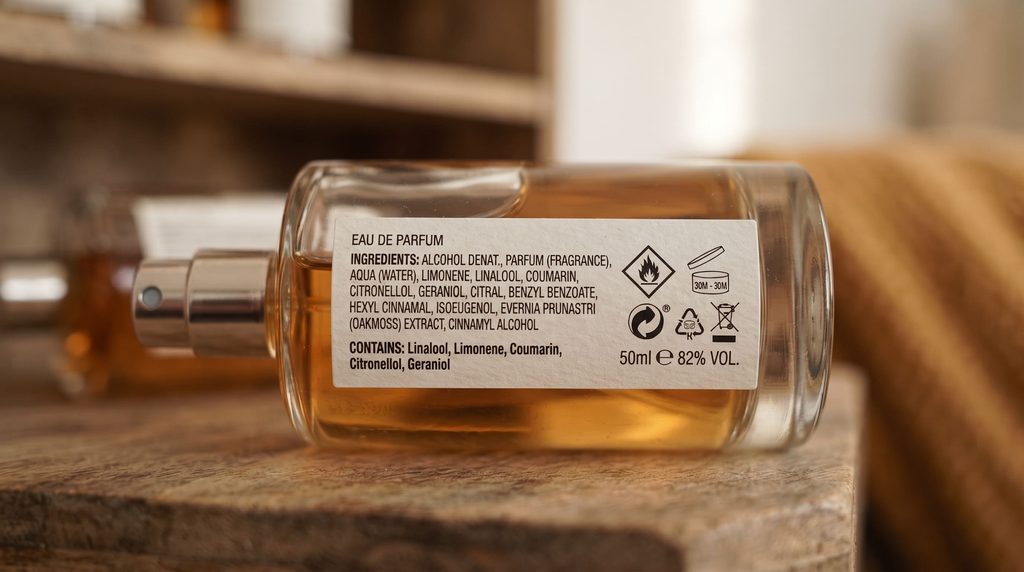
The EU has expanded its fragrance allergen labeling requirements, making the EU fragrance allergen declaration 2026 an important issue for perfume brands.
Under Commission Regulation (EU) 2023/1545, the list of fragrance allergens requiring individual declaration has expanded to more than 80 substances. The relevant thresholds are generally 0.001% for leave-on products and 0.01% for rinse-off products.
For new products, the updated requirements apply from 31 July 2026.
That means you should check your formula before ordering thousands of printed boxes. Finding a labeling issue after production is not exactly a fun business expense.
Your supplier or regulatory team should check:
- Which fragrance allergens are present
- Their concentration in the finished perfume
- Applicable INCI names
- Whether labeling thresholds are exceeded
- Whether any ingredient needs restriction or reformulation
3. Prepare the EU Cosmetic Compliance File
Selling perfume in the EU involves more than creating an attractive bottle and adding an ingredient list.
Under EU Cosmetics Regulation 1223/2009, cosmetic products generally require an EU-based Responsible Person, a safety assessment, a Product Information File (PIF) and product notification before being placed on the market.
What is a CPSR?
A Cosmetic Product Safety Report (CPSR) documents the safety assessment of a cosmetic product.
A qualified safety assessor reviews information about the product, including its ingredients, exposure and relevant toxicological information.
A simple way to remember it:
PIF = the product’s compliance file.
CPSR = the product’s safety assessment.
The two work together to support EU market entry.
The CPNP notification portal is used to notify cosmetic products before they are placed on the EU market.
4. Do Not Ignore REACH and CLP
When you work with fragrance ingredients, you may also come across REACH regulation and CLP regulation.
They are separate from EU cosmetic legislation.
REACH deals with the registration, evaluation, authorization and restriction of chemical substances.
CLP deals with the classification, labeling and packaging of substances and mixtures according to their hazards.
This is especially important when you are importing fragrance ingredients or fragrance mixtures for further manufacturing. The requirements can differ from those for a finished cosmetic perfume.

5. Know the Difference Between EU, UK and US Rules
International fragrance compliance becomes much easier when you stop treating the EU, UK and US as one market. Each destination has its own rules, documents and notification systems.
For the European Union, focus on:
- EU Responsible Person
- Product Information File
- Cosmetic Product Safety Report
- CPNP notification
- Ingredient and allergen labeling
- EU Cosmetics Regulation 1223/2009
When selling in Great Britain, make sure you have:
- UK Responsible Person
- Product Information File
- Safety assessment
- Required product labeling
- SCPN notification
The United States has a different approach. Key areas include:
- FDA cosmetic requirements
- MoCRA compliance
- Facility registration
- Product listing
- Safety substantiation
- Serious adverse event reporting
The US system is not simply a copy of the EU framework. Copying an EU label and changing the shipping address is not a compliance strategy.
6. Build Your Perfume Export Documentation Pack
Before production, create a clear perfume export documentation checklist.
Depending on your product and destination, this may include:
- IFRA Certificate of Conformity
- SDS
- COA
- Allergen declaration
- Ingredient information
- CPSR
- PIF
- Toxicological evaluation
- Stability information
- Batch and traceability records
- Final label artwork
- Responsible Person details
- CPNP or SCPN notification information
For certain compliance questions, cosmetic fragrance allergen testing using GC-MS/MS may also help identify and measure relevant substances.
Good documentation is not exciting. Neither is checking your luggage twice before a flight. But both can save you from an unpleasant surprise later.

7. Check Fragrance Ingredient Restrictions Before Production
A formula that works in one market may not work in another.
Your supplier should review current fragrance ingredient restrictions 2025-2026, including prohibited or restricted substances and applicable IFRA Standards.
Do not rely on an old formula just because it has been used successfully before. Regulations can change, and a formula may need to be updated.
For private label brands, this is particularly important. Changing a formula after bottles, boxes and labels have already been produced can create unnecessary costs and delays.
VERTEX perfume and brand manufacturing supports custom fragrance development, private label production and packaging for brands looking to build products for international markets.
8. Use This International Perfume Labeling Checklist
Before approving your final packaging, check:
- Product name and function
- Full ingredient list using applicable INCI nomenclature
- Relevant fragrance allergens
- Net quantity
- Batch number
- Responsible Person information where required
- Country of origin where required
- Usage warnings and precautions
- Period After Opening (PAO) symbol or durability information where applicable
- Required market language
- Correct notification and supporting documents
For EU products, Article 19 of Regulation 1223/2009 covers important cosmetic labeling requirements. Always check the rules that apply to your exact product and destination.

FAQs About Fragrance Compliance
What is IFRA certification and is it mandatory for exporting fragrances to the EU?
An IFRA Certificate of Conformity shows conformity with relevant IFRA fragrance safety standards. However, it is not an EU government certificate and does not replace mandatory EU cosmetic requirements.
What are the EU fragrance allergen labeling requirements as of 2026?
The EU has expanded individual fragrance allergen disclosure to more than 80 substances. For applicable allergens, the thresholds are generally 0.001% for leave-on products and 0.01% for rinse-off products. The new requirements apply to new products from 31 July 2026.
What is the difference between EU and US fragrance compliance requirements?
The EU requires a detailed cosmetic compliance system involving a Responsible Person, safety assessment, PIF and CPNP notification. In the US, MoCRA adds requirements such as facility registration, product listing and safety substantiation.
What documents are required to export perfumes internationally?
Common documents include an IFRA Certificate of Conformity, SDS, COA, allergen declaration and ingredient information. EU cosmetic products may additionally require a CPSR, PIF, Responsible Person and CPNP notification.
What is a CPSR and do I need one for perfumes?
A CPSR is a Cosmetic Product Safety Report used to document the safety assessment of a cosmetic product. For perfumes marketed as EU cosmetics, it forms part of the required safety documentation.
Final Thoughts
Fragrance compliance is part of the product, not an afterthought.
For international buyers, the safest approach is simple: check the destination market before approving the formula, packaging and production quantity.
VERTEX combines sourcing, manufacturing, packaging and global trade support across multiple industries, with its fragrance division focused on custom perfume development, private label manufacturing and brand development.
If you are planning a private label fragrance, custom perfume or international fragrance order, start by discussing your target market, documentation and labeling requirements with your manufacturing partner.
You can learn more about VERTEX or contact the team to discuss your sourcing and manufacturing requirements.
