



When you open a fresh bag of farm to industry spices, you notice the aroma before anything else. Then comes the color. A rich red chilli or bright golden turmeric instantly tells you the spices have been handled with care. Unfortunately, not every shipment reaches buyers with that same freshness.
I have seen how a small change in sourcing or storage can completely change the quality of a spice. That is why the journey from the farm to the factory matters just as much as the spice itself.
At VERTEX Supply Networks, every step is planned to help preserve the natural aroma, vibrant color, and consistent quality that international buyers expect. From carefully selected farms to export-ready packaging, the goal is simple. Deliver premium spices that perform the same way in every batch.
Whether you are an importer, food manufacturer, overseas distributor, or buying agent, understanding this process can help you choose a supplier with confidence.
What Does “Farm to Industry Spices” Mean in Sourcing?
The phrase farm to industry spices simply means reducing unnecessary stops between the farm and the final customer. Instead of passing through several middlemen, spices move through a controlled supply chain where quality is monitored at every stage.
This approach helps VERTEX maintain freshness while improving consistency for industrial buyers.
Why direct farm sourcing makes a difference
Instead of relying on open market trading, direct sourcing offers several benefits.
- Fresher raw materials
- Better natural aroma preservation
- Improved spice color retention
- Lower risk of contamination
- Better spice traceability
- More consistent quality from one shipment to the next
For buyers, that means fewer surprises when production begins.

How VERTEX Takes Spices from Farm to Industry
Every stage of the journey affects spice quality. From harvesting and drying to processing and packaging, VERTEX carefully manages how spices move from farm to industry. This controlled approach helps preserve natural aroma, color, and consistency before every shipment reaches international buyers.
The aroma of a spice comes from its natural oils. These oils are delicate and can disappear quickly if spices are exposed to too much heat, moisture, or air.
VERTEX focuses on protecting those natural oils throughout processing.
The process includes:
- Careful drying after harvest
- Controlled processing temperatures
- Reduced exposure to air
- Proper storage conditions
- Regular moisture monitoring
Take turmeric as an example. Proper aroma retention in turmeric depends on careful drying. If the drying temperature becomes too high, the spice may still look beautiful, but much of its characteristic aroma is already gone.
The same attention is given to kasuri methi aroma preservation, where freshness directly affects the final flavor.
Protecting Natural Color Throughout the Farm to Industry Journey
Color is more than appearance. It is often one of the first quality indicators buyers notice.
A food manufacturer expects every production batch to look identical. Even small color variations can affect the finished product.
To maintain natural color, VERTEX focuses on:
- Harvesting spices at the right maturity
- Gentle drying methods
- Protection from direct sunlight
- Moisture controlled storage
- Export packaging that blocks light and humidity
Some spices require even more attention.
Spices that lose color more easily
- Red chilli can lose its bright red pigments if stored incorrectly.
- Turmeric may lose its vibrant yellow appearance over time.
- Paprika is sensitive to oxidation.
- Kasuri methi can darken when exposed to excess moisture.
This careful handling helps improve color stability in red chilli and keeps every shipment looking fresh.
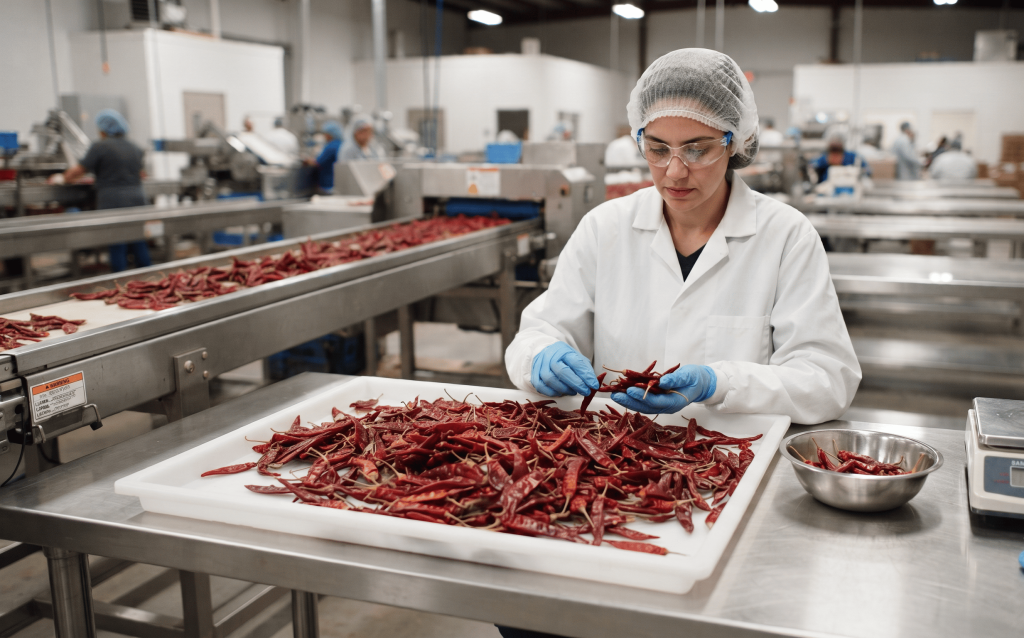
Why Moisture Control Is So Important
If I had to point to one factor that quietly damages spice quality, it would be moisture.
Too much moisture can lead to:
- Loss of aroma
- Faded color
- Mold growth
- Clumping
- Reduced shelf life
That is why spice moisture content control is part of every quality check at VERTEX.
Maintaining the correct moisture level helps improve consistent spice batch quality while supporting longer shelf life during international shipping.
Quality Checks Behind Farm to Industry Spices
Reliable buyers expect reliable quality.
Before spices leave the facility, VERTEX performs multiple quality inspections to ensure every batch meets customer expectations.
Quality checks include:
- Moisture testing
- Aroma evaluation
- Color inspection
- Foreign matter inspection
- Microbiological testing
- Particle size verification
- Batch documentation for traceability
These checks help support premium spices supply for food manufacturers around the world.

Are VERTEX Spices Suitable for Food Manufacturing?
Yes.
VERTEX supplies spices for a wide range of industries, including:
- Seasoning manufacturers
- Snack producers
- Sauce manufacturers
- Frozen food companies
- Ready meal producers
- Industrial food processing facilities
The company also supports buyers looking for a trusted bulk turmeric supplier, garlic supply for food manufacturing, and red chilli powder export partner.
Natural Spices or Synthetic Preservatives?
Many consumers today prefer simple ingredient lists.
Natural spices offer several advantages.
- They add authentic flavor.
- They contribute natural color.
- They support clean label products.
- They improve consumer appeal.
While synthetic preservatives may still have specific technical uses, high quality farm-sourced spices continue to be the preferred choice for brands looking for authentic ingredients.
Packaging That Protects Every Shipment
Even premium spices can lose quality if the packaging is poor.
VERTEX uses packaging designed for international transport, including:
- Multi layer laminated bags
- Food grade inner liners
- Moisture resistant packaging
- Light protective materials
- Strong export cartons
This helps preserve aroma, color, and freshness throughout the shipping journey.

How Buyers Can Verify Spice Traceability
Traceability is becoming more important every year.
A reliable supplier should be able to provide information such as:
- Farm origin
- Harvest season
- Processing date
- Quality inspection records
- Export documentation
This transparency supports sustainable spice sourcing and ethical spice procurement, giving buyers greater confidence in every shipment.
Which Spices Work Best for Industrial Processing?
Different food products require different spice profiles.
Some of the most popular industrial choices include:
- Turmeric for seasoning blends and sauces
- Red chilli powder for snacks and spice mixes
- Garlic for processed foods and ready meals
- Kasuri methi for frozen foods and curry blends
- Custom spice blends for food manufacturing
These products are processed to meet the consistency required by commercial food production.
Final Thoughts
The quality of a spice is shaped long before it reaches your warehouse. It begins at the farm, continues through careful processing, and is protected with strict quality checks and export-ready packaging.
That is the approach followed by VERTEX. By combining direct farm sourcing for spices, controlled processing, moisture management, traceability, and reliable packaging, VERTEX helps international buyers receive spices with natural aroma, vibrant color, and consistent quality in every shipment.
Whether you are an importer, food manufacturer, overseas distributor, or buying agent, partnering with the right supplier can make a real difference to your business.
Looking for a trusted supplier of farm to industry spices?
Contact VERTEX Supply Networks today to discuss your requirements and build a dependable spice supply chain with confidence.
Contact VERTEX Supply Networks
📞 Phone: +92 337 9233693
📧 Email: vertexsupplynetworks@gmail.com
