
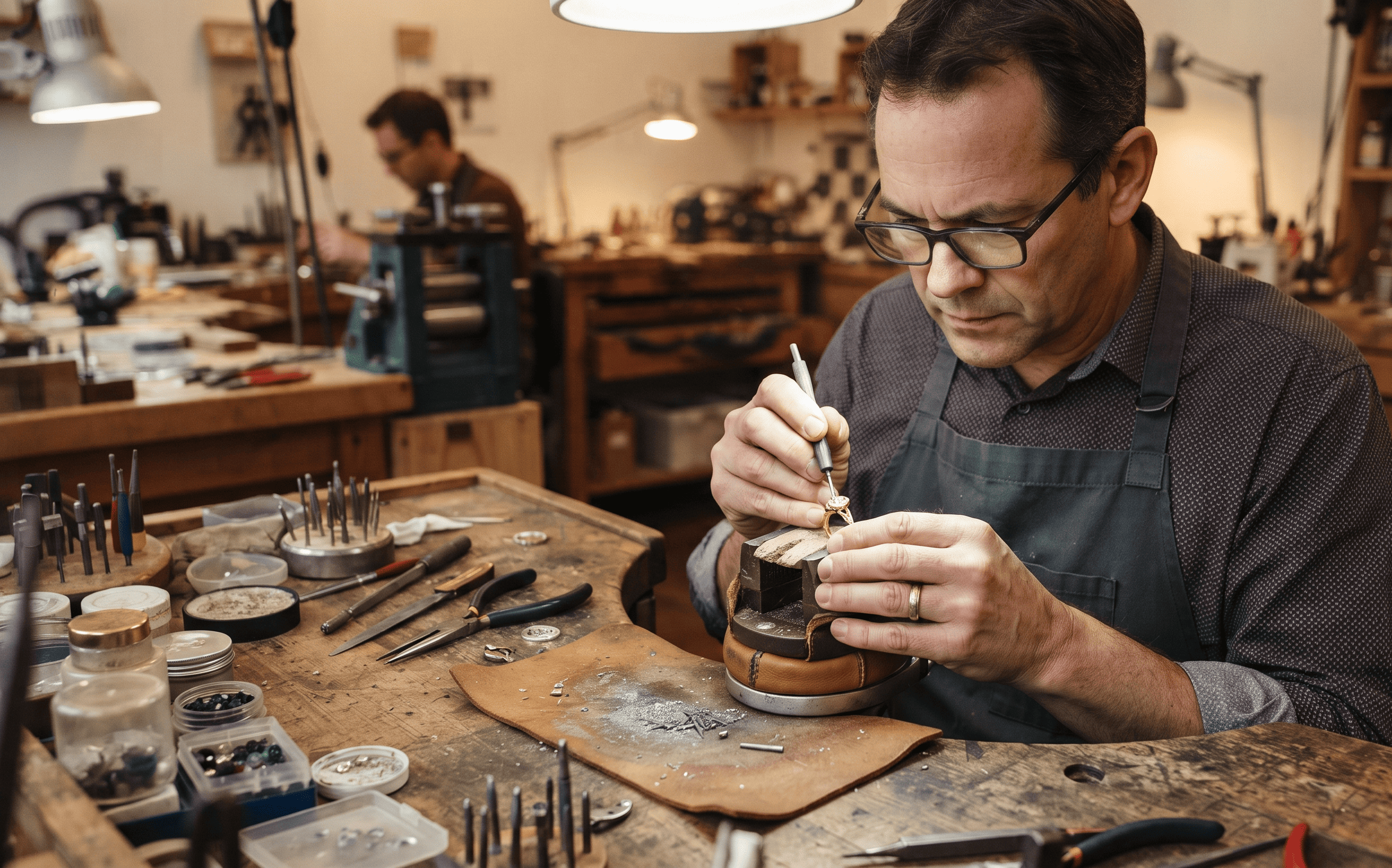

Have you ever held a beautiful piece of jewelry and wondered how it was made? Jewelry artisans are the skilled professionals behind every polished ring, elegant necklace, and sparkling bracelet you see. Most people imagine machines doing all the work. I used to think that too. But once you look behind the scenes, you quickly realize that every piece still depends on experienced human hands.
Technology has changed the jewelry industry, but it has not replaced craftsmanship. Instead, it has given skilled artisans better tools to create jewelry with greater precision, consistency, and quality.
At VERTEX Supply Networks, we believe successful jewelry manufacturing comes from combining modern production with experienced craftsmanship. We help brands, retailers, importers, wholesalers, distributors, and buying agents source export ready jewelry that meets international quality standards while maintaining the attention to detail customers expect.
Why Skilled Artisans in Jewelry Production Still Matter
Modern factories use advanced equipment to improve efficiency, but machines cannot replace experience.
A skilled artisan can notice tiny imperfections that software may miss. They understand how metal behaves, how gemstones should sit, and how every finished piece should look before it reaches a customer.
This is why skilled artisans in jewelry production remain one of the most valuable parts of the manufacturing process.
They help with:
- Precision stone setting
- Hand polishing and finishing
- Engraving and detailing
- Product inspection
- Final quality checks
- Maintaining consistency across production batches
These small details make a big difference, especially for international buyers who expect every shipment to meet the same high standard.
Jewelry Artisans and Modern Manufacturing
People sometimes think technology has replaced traditional craftsmanship.
The truth is the opposite.
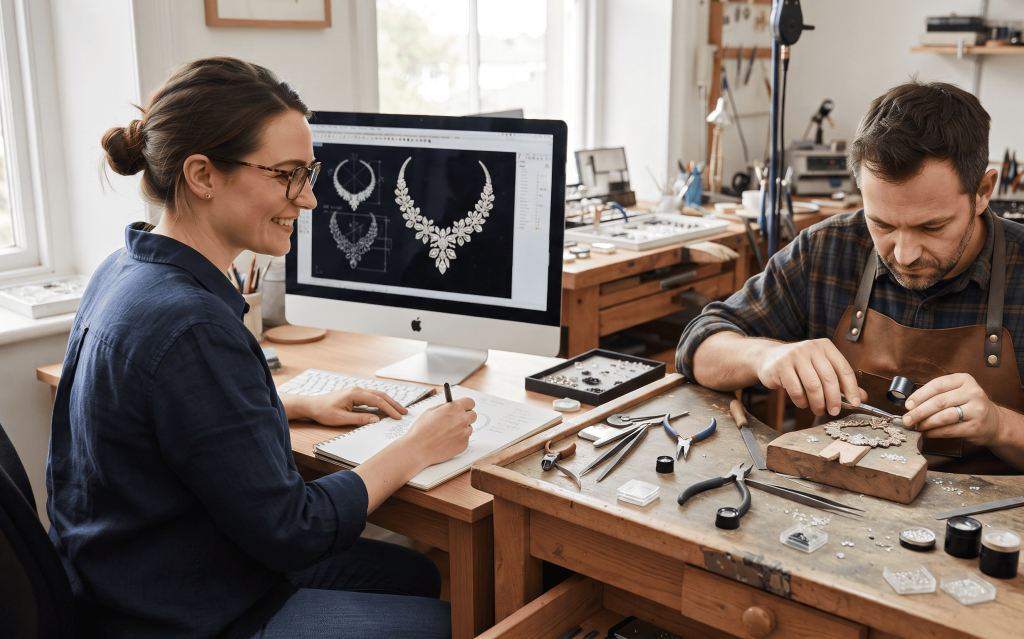
Modern tools help artisans work faster and more accurately while allowing them to focus on the detailed work that requires experience.
A typical jewelry manufacturing process includes:
- Creating digital designs with CAD software.
- Producing prototypes using 3D printing.
- Casting jewelry components.
- Hand assembling individual pieces.
- Setting gemstones by experienced artisans.
- Completing jewelry finishing and polishing.
- Performing detailed quality inspections before export.
This combination creates products that look premium while supporting large production volumes for global markets.
Jewelry Craftsmanship Is What Customers Actually Notice
Your customers may never visit the factory.
They probably will not know which machines were used.
What they do notice is how the jewelry feels when they wear it.
Smooth edges. Perfectly placed stones. Bright polishing. Comfortable designs.
These are all results of excellent jewelry craftsmanship.
Experienced artisans improve:
- Surface quality
- Product durability
- Stone alignment
- Fine detailing
- Comfort during wear
- Overall appearance
For brands selling internationally, these details help reduce returns, increase customer satisfaction, and build long term trust.
Traditional Jewelry Techniques Still Add Value
Some skills never go out of style.
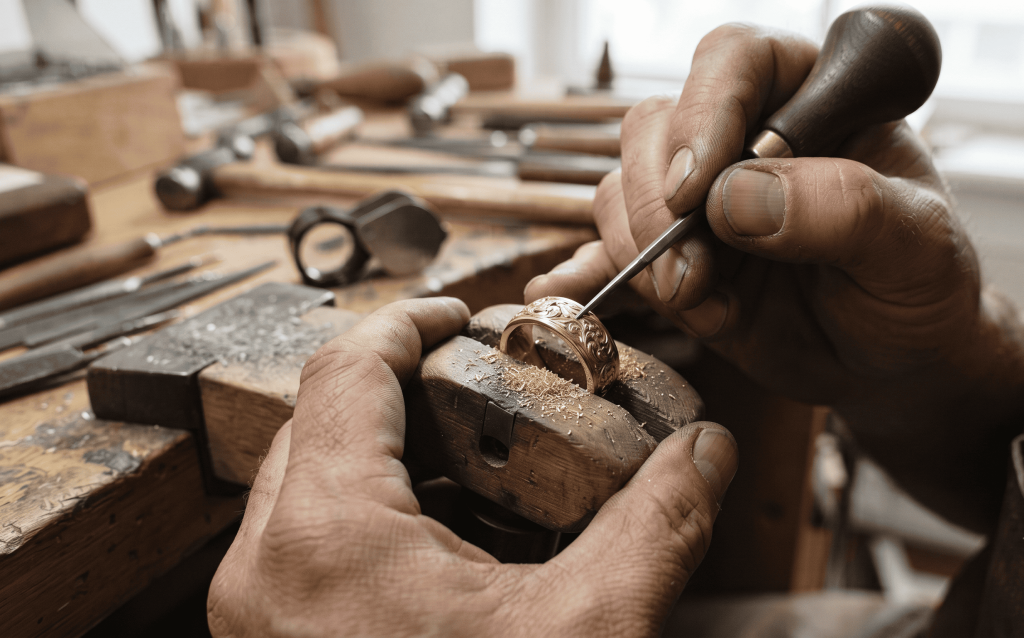
Many experienced jewelers continue using traditional jewelry techniques that have been passed down through generations.
These include:
- Goldsmith craftsmanship
- Metalworking in jewelry
- Hand engraving
- Jewelry handcrafting
- Precision stone setting
- Final polishing by hand
These handcrafted jewelry techniques give every piece a level of character that automated production alone cannot create.
Even today, luxury brands continue to value these traditional skills because they help products stand out in competitive markets.
How Jewelry Artisans Help Modern Brands Scale Production
Growing production should never mean sacrificing quality.
That is why VERTEX Supply Networks works with manufacturing partners that combine skilled artisan teams with efficient production systems.
Successful jewelry manufacturing depends on:
- Experienced artisans
- Modern production technology
- Strict jewelry quality control
- Consistent finishing standards
- Reliable production planning
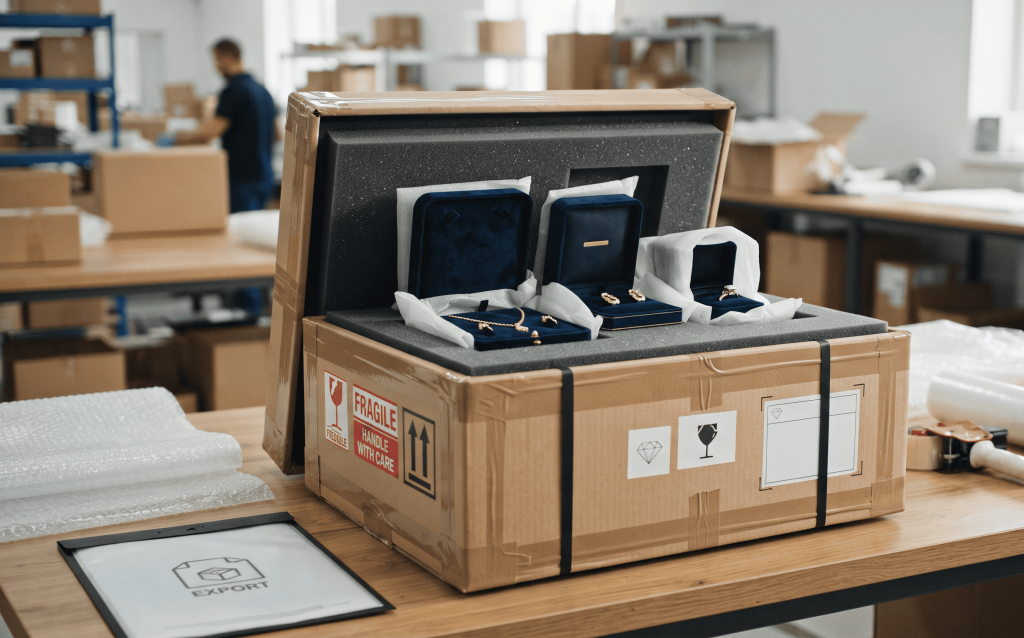
- Export ready packaging
- Global logistics support
This balanced approach allows businesses to increase production while maintaining the same quality across every order.
Whether you need small batch collections or large volume manufacturing, quality should remain consistent from the first shipment to the last.

Why Global Buyers Partner with VERTEX Supply Networks
Finding the right manufacturing partner is about much more than price.
You need a supply partner that understands quality, timelines, communication, and international business requirements.
VERTEX Supply Networks supports brands and global buyers by providing:
- Custom jewelry manufacturing
- Private label jewelry production
- Gold, silver, and stainless steel jewelry solutions
- Small batch and bulk manufacturing
- Product sourcing
- Export ready packaging
- Global supply chain support
- Consistent quality control
Our goal is to simplify sourcing while helping businesses receive jewelry that reflects both modern manufacturing and skilled craftsmanship.
Frequently Asked Questions
What is the role of jewelry artisans in modern jewelry production?
Skilled artisans complete the detailed work that machines cannot handle well. They perform stone setting, engraving, finishing, polishing, assembly, and final quality inspection to ensure every product meets international standards.
Which parts of jewelry making still require handcrafting?
Stone setting, engraving, jewelry finishing, polishing, detailing, repairs, and quality inspection all continue to rely on experienced artisans.
How do jewelry artisans use CAD and 3D printing in jewelry production?
CAD software creates precise digital designs, while 3D printing produces prototypes. Skilled artisans then refine, assemble, polish, and inspect each piece before it is ready for production.
Why is stone setting considered a highly skilled jewelry craft?
Stone setting requires precision and years of experience. Proper placement keeps gemstones secure while improving symmetry, durability, and the overall appearance of the jewelry.
How can modern brands scale production without losing craftsmanship?
By combining skilled artisans with modern manufacturing technology, structured production systems, and strict quality control, brands can increase production while maintaining consistent quality.
Final Thoughts
Beautiful jewelry is not created by machines alone.
Behind every finished piece is a skilled artisan who adds the care, precision, and experience that customers can actually see.
At VERTEX, we combine modern manufacturing capabilities with experienced craftsmanship to help brands source export quality jewelry with confidence. From product development and private label manufacturing to quality control and global logistics, we support businesses looking for reliable, scalable, and professional jewelry manufacturing solutions.
If you are searching for a trusted sourcing partner for your next jewelry collection, VERTEX team is ready to help you build a stronger and more dependable global supply chain.
Contact VERTEX Supply Networks
📞 Phone: +92 337 9233693
📧 Email: vertexsupplynetworks@gmail.com
