

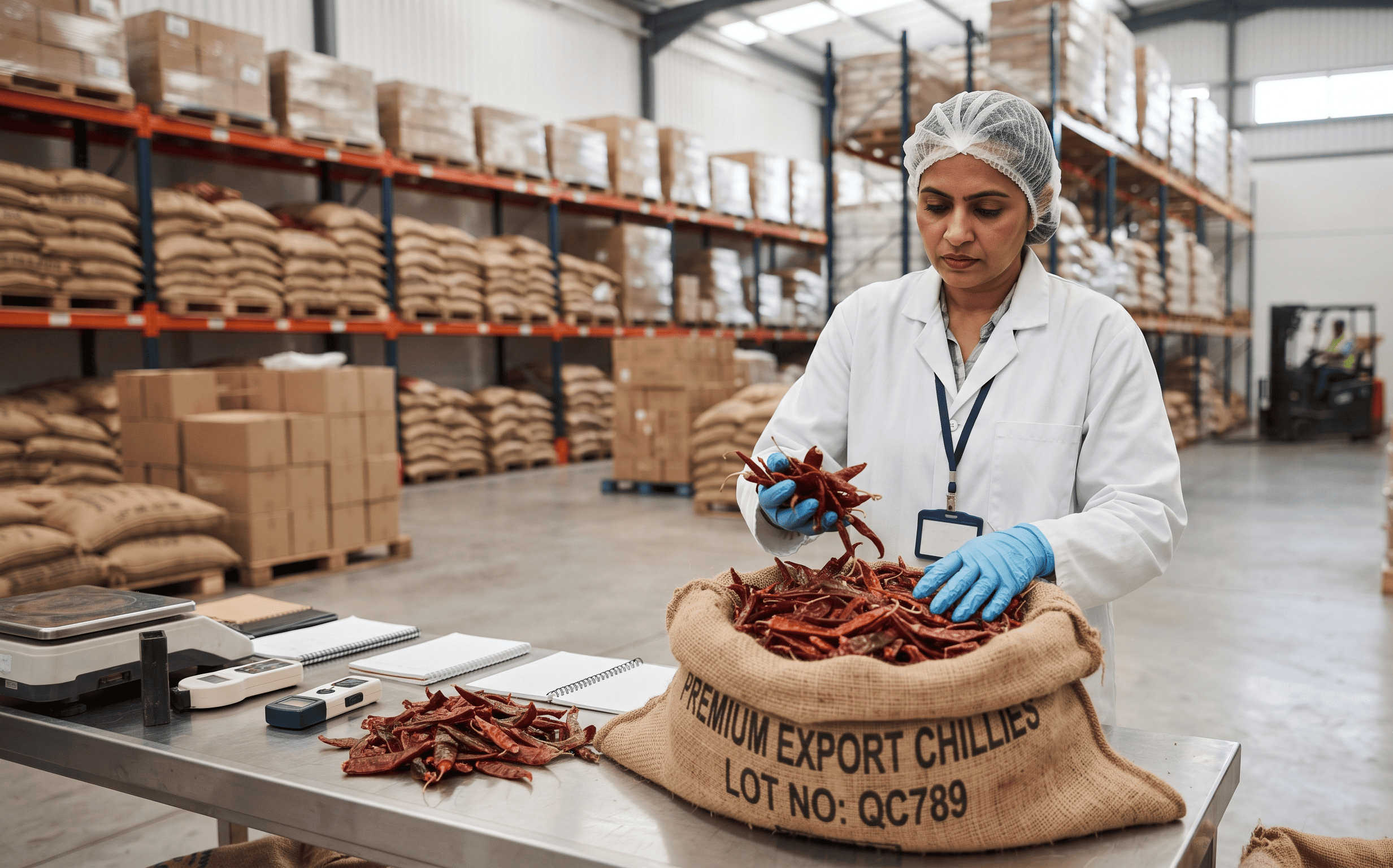

Red chilli quality standards are the foundation of successful international sourcing. If you are importing red chillies for food processing, wholesale distribution, or retail, understanding these standards can save you from costly mistakes.
Finding a reliable supplier is not just about getting the best price. It is about receiving the same quality every single time.
Imagine opening a container expecting bright, clean, export-quality chillies, only to discover mould, poor colour, or failed laboratory results. That one shipment can delay production, increase costs, and damage customer trust.
At VERTEX Supply Networks, we believe successful sourcing starts long before the shipment reaches your warehouse. It starts with choosing suppliers who understand international quality standards and consistently meet them.
If you are an importer, overseas buyer, food processor, buying agent, or international distributor, this guide will help you understand the red chilli quality standards that matter most when sourcing for global markets.
Why Red Chilli Quality Standards Matter
Buying high-quality red chilli is about much more than appearance.
A bright red chilli may still contain too much moisture or fail food safety testing. That is why experienced buyers always ask for quality reports before confirming an order.
Following proper red chilli export quality parameters helps you:
- Reduce the chance of rejected shipments
- Protect your brand reputation
- Meet international food safety regulations
- Deliver consistent products to your customers
- Build long-term relationships with reliable suppliers
At VERTEX, quality verification is an important part of the sourcing process because every shipment represents your business as much as ours.
7 Red Chilli Quality Standards Every Buyer Should Know
1. Red Chilli Moisture Standards
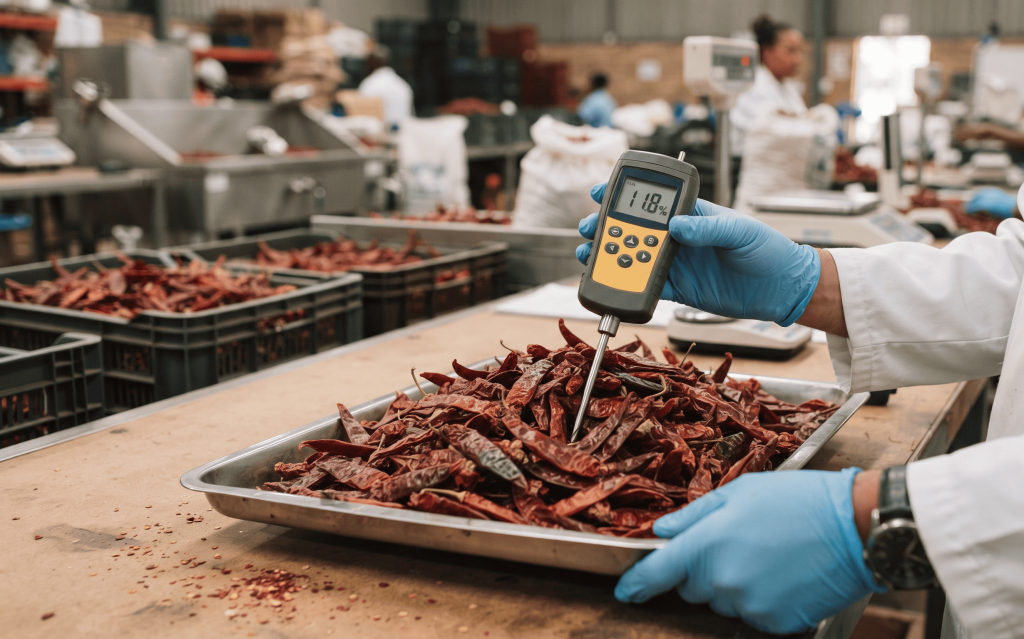
One of the biggest causes of quality problems is excessive moisture.
The recommended red chilli moisture content standards for export are usually 10 to 12 percent or lower. When moisture is higher than recommended, chillies become more likely to develop mould and harmful toxins while travelling across long distances.
Before buying, always confirm that moisture testing has been completed.
A good export shipment should have:
- Moisture content of 10 to 12 percent or less
- Proper drying before packing
- Clean and dry storage conditions
- Protection from humidity during transportation
Keeping moisture under control helps preserve colour, aroma, flavour, and shelf life.
2. ASTA Colour Value
Colour is often the first thing customers notice.
The red chilli ASTA colour value measures how rich and vibrant the chilli’s natural red colour is. Food manufacturers rely on this value because it helps produce sauces, seasonings, paprika, and spice blends with a consistent appearance.
Higher ASTA values usually mean:
- Brighter natural red colour
- Better visual appeal
- More consistent food production
- Greater value for colour-sensitive products
If your customers expect every batch to look the same, ASTA testing should never be skipped.
3. SHU (Scoville Heat Units)
Not every recipe needs the same level of heat.
Some products need a gentle kick, while others require intense spice. That is why buyers specify Red Chilli SHU (Scoville Heat Units) before placing large orders.
For example:
- Byadgi is known for its rich colour and mild to medium heat.
- Sannam offers balanced colour and medium heat.
- Teja delivers high heat and is popular in spicy food products.
Choosing the right SHU helps maintain consistent flavour across every production batch.

4. Aflatoxin Limits
Food safety should never be treated as an afterthought.
Aflatoxins are harmful toxins that can develop when chillies are stored in poor conditions with too much moisture.
Understanding Red Chilli Aflatoxin Limits is essential because every importing country has its own regulations.
For buyers exporting to Europe, the maximum total aflatoxin limit is generally 10 ppb. Other countries may have different requirements, so it is always important to check the latest regulations before shipping.
A trusted supplier should provide laboratory reports that verify compliance before dispatch.
5. Pesticide MRL Compliance
Many shipments fail inspections because pesticide residues exceed legal limits.
Checking Red Chilli Pesticide MRL Compliance protects your business from unnecessary customs delays and rejected shipments.
Always ask your supplier for:
- Certificate of Analysis (COA)
- Batch-specific laboratory reports
- Accredited laboratory testing
- Third-party verification when needed
Good suppliers are always willing to share this information because they understand how important transparency is.
6. Food Safety and Quality Testing
Professional exporters do much more than check colour and moisture.
A complete quality inspection may also include testing for:
- Foreign matter
- Damaged or discoloured pods
- Microbiological contamination
- Sudan dyes
- Pesticide residues
- Aflatoxins
Some international markets have zero tolerance for Sudan dyes, making laboratory testing especially important before export.
7. Documentation for Import
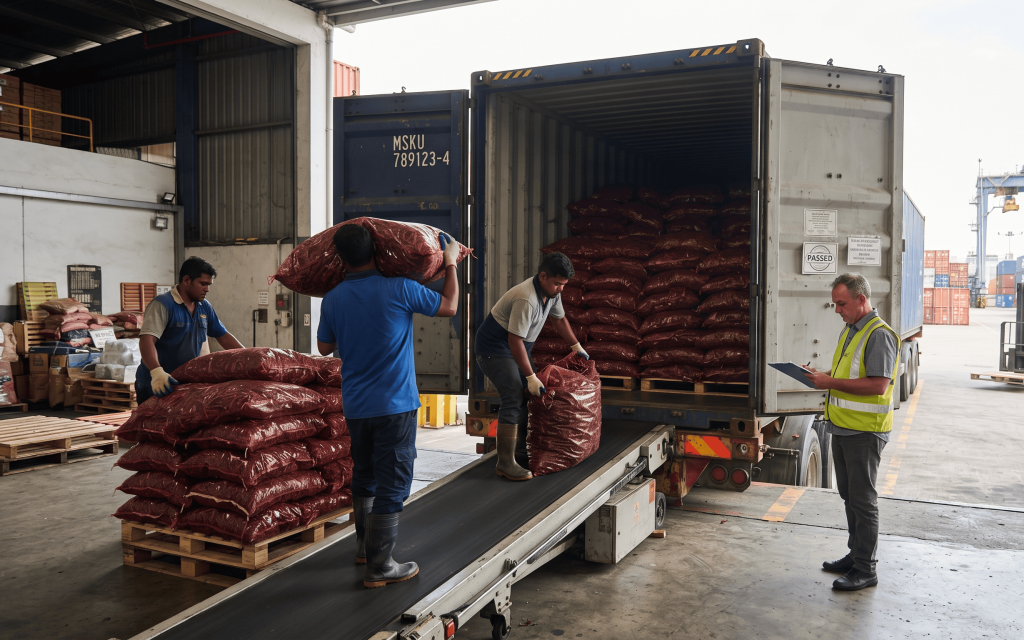
Even premium-quality products can face delays if the paperwork is incomplete.
Common Red Chilli Documentation for Import includes:
- Commercial Invoice
- Packing List
- Bill of Lading
- Certificate of Origin
- Phytosanitary Certificate
- Fumigation Certificate when required
- Laboratory Test Reports
- Health Certificate where applicable
Complete documentation helps speed up customs clearance and gives buyers greater confidence.
How VERTEX Supply Networks Supports Global Buyers
Sourcing agricultural products should never feel uncertain.
At VERTEX, we work with trusted supplier networks and focus on quality, consistency, and transparency throughout the sourcing process.
Our approach includes:
- Careful supplier selection
- Batch-level quality verification
- Export documentation support
- Reliable communication
- International sourcing expertise
Our goal is simple. Help buyers receive products that meet their expectations every time.
Quick Quality Checklist for Buyers
Before confirming your order, make sure your supplier provides:
- Moisture content of 10 to 12 percent or lower
- Foreign matter within acceptable limits
- Minimal damaged or discoloured pods
- ASTA colour value according to your requirements
- SHU based on your product application
- Aflatoxin laboratory reports
- Pesticide MRL compliance reports
- Complete export documentation
- Batch-wise Certificate of Analysis (COA)
A simple checklist today can prevent expensive problems tomorrow.
Frequently Asked Questions
What are the key Red Chilli Quality Standards for importers?
The most important red chilli quality standards include moisture content, foreign matter, damaged pods, ASTA colour value, SHU, aflatoxin levels, pesticide residue compliance, and microbiological safety. Together, these factors help buyers evaluate product quality before shipment.
What moisture level is safe under Red Chilli Quality Standards?
The best moisture level for red chilli export is generally 10 to 12 percent or lower. Lower moisture helps reduce the risk of mould growth and preserves product quality during storage and shipping.
Why are Red Chilli ASTA Standards important?
The Red Chilli ASTA Colour Value measures the intensity of a chilli’s natural red colour. A higher value usually means brighter colour, making it especially important for paprika, sauces, seasonings, and food processing.
How is chilli heat measured (SHU)?
Heat is measured using Scoville Heat Units (SHU), which are based on capsaicin content. Buyers choose different SHU ranges depending on whether the chilli will be used in sauces, snacks, spice blends, or processed foods.
How do I verify a supplier’s quality compliance?
Ask for batch-wise Certificates of Analysis, accredited laboratory reports, export certifications, and third-party inspection reports. Working with experienced sourcing partners like VERTEX Supply Networks also provides greater confidence in product quality and international compliance.
Final Thoughts
Strong sourcing decisions begin with understanding red chilli quality standards before you place an order.
By checking moisture content, ASTA colour value, SHU, aflatoxin limits, pesticide compliance, and export documentation, you can reduce supply chain risks and maintain consistent product quality.
At VERTEX, we help importers, overseas buyers, international distributors, wholesalers, food processors, and buying agents source high-quality agricultural products through trusted supplier partnerships and transparent sourcing practices.
If you are looking for a dependable sourcing partner for premium-quality red chillies and other agricultural products, our team is ready to help you source with confidence.
Contact VERTEX Supply Networks
📞 Phone: +92 337 9233693
📧 Email: vertexsupplynetworks@gmail.com
