



Jewelry quality control can make the difference between a successful jewelry shipment and an expensive mistake. If you’ve ever imported jewelry, you probably know the feeling. The shipment finally arrives. The packaging looks great. You open the first box, excited to see the finished pieces. Then you notice tiny scratches, uneven plating, or a loose stone. Suddenly, what looked like a successful order turns into customer complaints, returns, and unexpected costs.
That is exactly why jewelry quality control matters.
At VERTEX Supply Networks, quality is never treated as a final step. It is built into the entire manufacturing process, from plating to the final polish. Every inspection is designed to help international buyers receive jewelry that looks beautiful, performs well, and meets the expectations of their customers.
Whether you’re an importer, distributor, wholesaler, retailer, or buying agent, understanding this process can help you choose the right manufacturing partner.
7 Ways VERTEX Manages Jewelry Quality Control
1. Everything Starts with an Approved Sample
Before production begins, VERTEX works closely with customers to approve a sample that reflects exactly what will be manufactured.
This approved sample becomes the reference for the entire order. Instead of guessing what “good quality” looks like, every team involved has a clear standard to follow.
During sample approval, VERTEX verifies:
- Product dimensions
- Weight
- Stone placement
- Plating color
- Surface finish
- Overall craftsmanship
Starting with an approved sample helps reduce production mistakes and keeps every batch consistent.
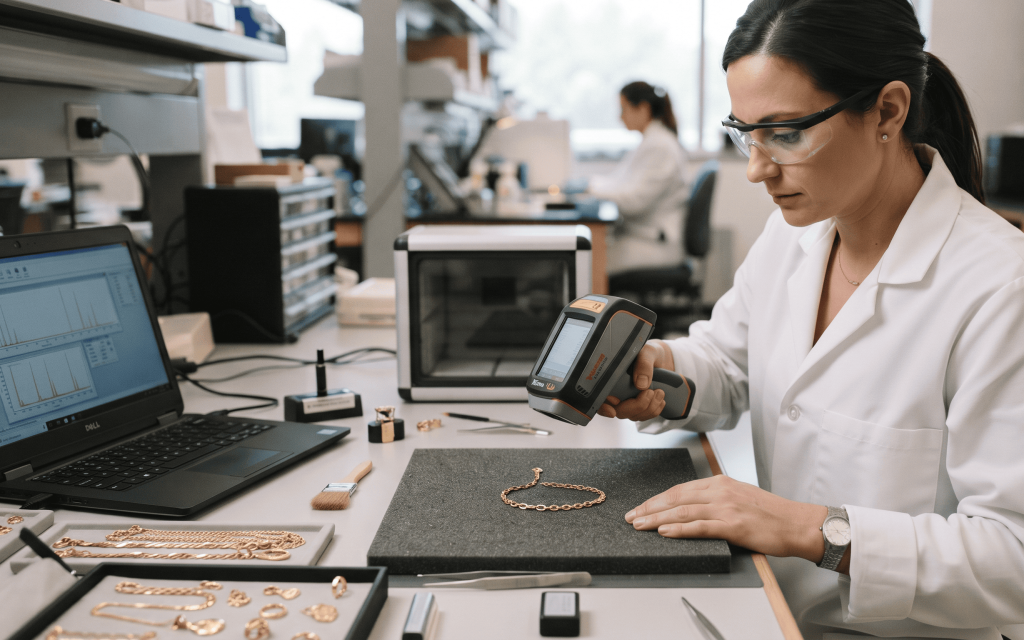
2. Plating Thickness Is Checked with XRF Jewelry Testing
Plating gives jewelry its beautiful finish, but appearance alone doesn’t tell the whole story.
If the plating is too thin, it can wear off quickly. If it is inconsistent, customers may notice color differences between pieces.
That is why VERTEX performs plating thickness measurement using XRF jewelry testing.
An XRF analyzer measures the thickness of gold, silver, or rhodium plating without damaging the jewelry. The results are measured in microns, making the inspection accurate and repeatable.
This process helps buyers receive products that meet the agreed specifications instead of relying only on visual inspection.
Every plating inspection focuses on:
- Gold plating thickness
- Rhodium plating QC
- Silver plating consistency
- Color uniformity
- Surface quality
3. Every Plated Piece Is Carefully Inspected
Plating is only considered successful if it looks good and stays attached to the jewelry.
After plating, inspectors carefully examine each production batch before it moves to polishing.
The team checks for:
- Even plating color
- Strong plating adhesion
- Smooth surface finishing
- Clean polishing preparation
They also look for common defects after jewelry plating, including:
- Thin plating
- Uneven color
- Peeling
- Blistering
- Surface contamination
- Discoloration
Catching these issues before polishing saves time, reduces waste, and helps maintain consistent quality across every shipment.
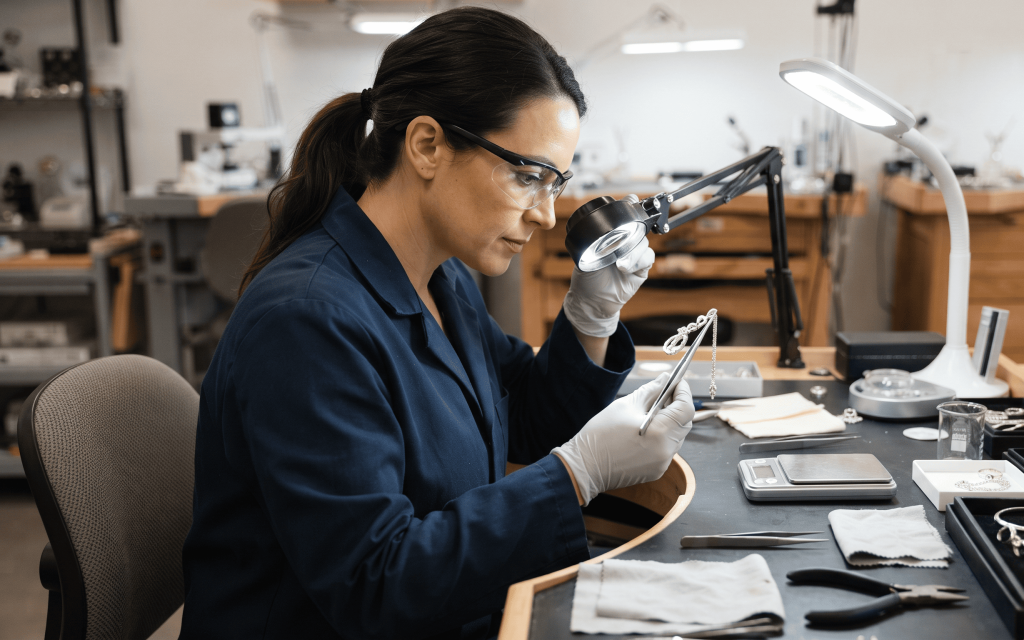
4. Fire Scale Is Removed Before Final Finishing
Sterling silver jewelry requires extra attention because hidden defects can appear after heating during manufacturing.
One of the most common issues is sterling silver fire scale. It often appears beneath the surface and can become visible after polishing if it is not treated properly.
At VERTEX, jewelry is inspected under controlled lighting before finishing begins. This allows the team to identify hidden surface marks before they become expensive problems later.
It may seem like a small detail, but removing fire scale makes a noticeable difference in the final appearance of sterling silver jewelry.
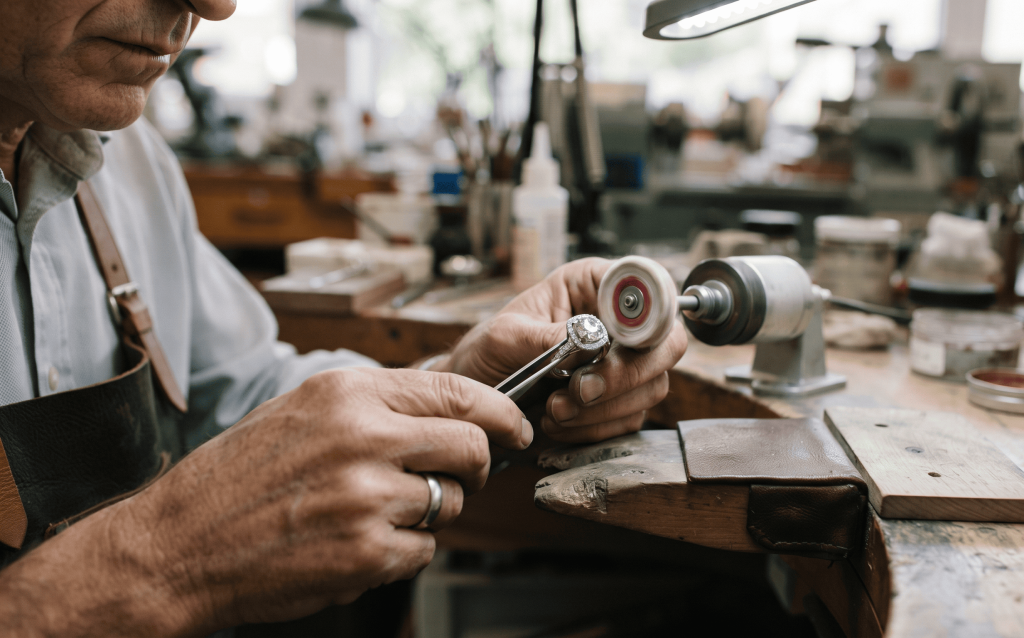
5. Final Polish Inspection Brings Out the Best Finish
You can usually tell the quality of jewelry within a few seconds of holding it.
A premium finish feels smooth, reflects light evenly, and has no visible scratches.
That is why final polish inspection is one of the most important stages of the process.
Inspectors carefully review every piece for:
- Mirror like shine
- Smooth edges
- Scratch free surfaces
- No polishing drag lines
- Clean stone settings
- No polishing compound left behind
- Consistent jewelry surface finishing
These small details are often what separate premium jewelry from average products.
6. Jewelry Must Work as Good as It Looks
A beautiful necklace isn’t very useful if the clasp breaks the first time someone wears it.
That is why VERTEX also performs functional inspections before products are approved.
Depending on the product, inspectors may check:
- Clasp operation
- Hinge movement
- Earring post strength
- Stone security
- Locking mechanisms
- Overall durability
These practical checks help reduce the chance of customer complaints after delivery.
7. Pre Shipment Jewelry QC Gives Buyers More Confidence
The final inspection is the last opportunity to confirm that every product matches the customer’s requirements.
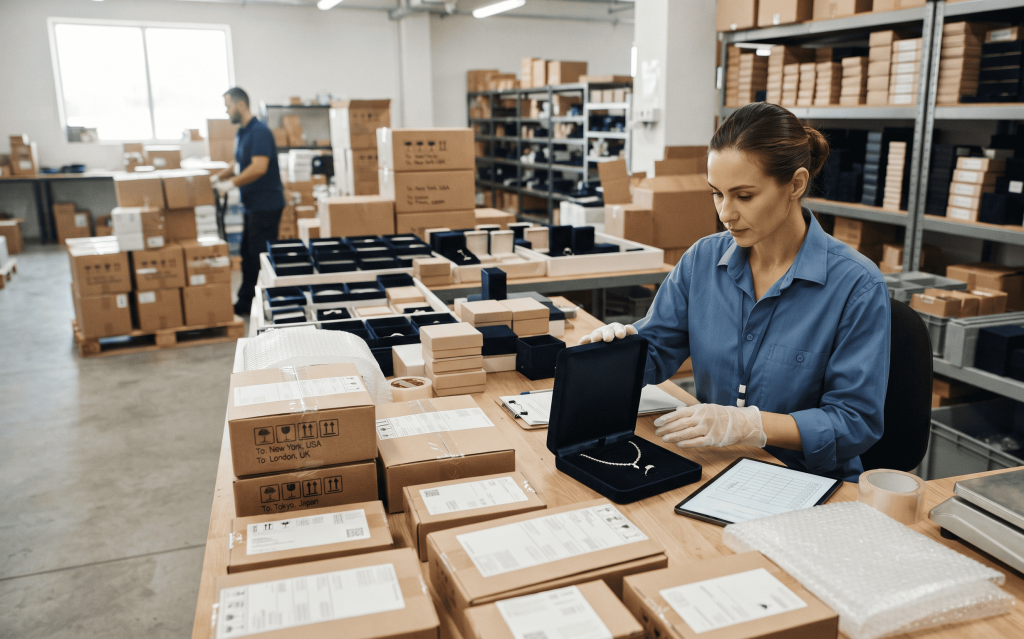
VERTEX performs pre shipment jewelry QC before orders leave the factory.
The inspection typically verifies:
- Product appearance
- Plating consistency
- Dimensions
- Stone placement
- Packaging
- Product quantity
- Labeling
- Export documentation
The team also follows AQL jewelry inspection practices to help maintain consistent quality throughout production.
For overseas buyers, this extra layer of inspection provides confidence before products begin their international journey.
Why Global Buyers Choose VERTEX
Buying jewelry from overseas should feel exciting, not stressful.
VERTEX supports brands, retailers, distributors, wholesalers, and buying agents by combining manufacturing experience with dependable quality control.
Instead of treating production and inspection as separate jobs, every stage works together to deliver consistent results.
When you work with VERTEX, you benefit from:
- Professional jewelry manufacturing
- Custom and private label solutions
- Careful jewelry quality control
- Reliable production consistency
- Export ready packaging
- International supply chain support
- Transparent communication
- On time delivery planning
That combination helps buyers reduce sourcing risks while building long term partnerships.
Frequently Asked Questions
What quality control checkpoints does VERTEX use after plating?
After plating, VERTEX checks plating thickness using XRF testing, verifies color consistency, inspects plating adhesion, and looks for scratches, peeling, or other surface defects before the jewelry moves to final polishing.
How is plating thickness measured on jewelry?
VERTEX uses XRF jewelry testing to perform plating thickness measurement. This non destructive method accurately measures gold, silver, and rhodium plating in microns without damaging the jewelry.
What defects are most common after plating?
Some of the most common defects include uneven color, thin plating, peeling, blistering, discoloration, and trapped polishing residue around detailed areas.
What happens during the final quality inspection?
The final polish inspection checks for a mirror like finish, smooth edges, clean surfaces, scratch free polishing, and proper removal of polishing compounds before the jewelry is approved.
What documentation does VERTEX provide for quality control?
Depending on customer requirements, VERTEX can provide quality inspection records, production documentation, verification reports, and pre shipment inspection information to support international sourcing.
Conclusion
Great jewelry is never the result of luck. It comes from careful planning, skilled craftsmanship, and consistent inspections at every stage of production.
From plating thickness measurement and XRF jewelry testing to final polish inspection and pre shipment jewelry QC, VERTEX follows a quality focused process that helps importers, distributors, wholesalers, retailers, and buying agents source jewelry with confidence.
If you’re looking for a trusted partner who values quality just as much as you do, VERTEX team is ready to support your next jewelry project with reliable manufacturing, careful inspections, and global supply solutions.
Contact VERTEX Supply Networks
📞 Phone: +92 337 9233693
📧 Email: vertexsupplynetworks@gmail.com
