
You may not think about fiber when you look at a road, a rope, a diaper, or an industrial fabric. Yet polypropylene fiber often plays an important role in these products.
Also called PP fiber, this lightweight synthetic fiber offers moisture resistance, chemical resistance, durability, and cost efficiency. Manufacturers use these qualities across construction, geotextiles, hygiene products, automotive components, ropes, and technical textiles.
For importers, overseas buyers, distributors, wholesalers, and buying agents, the appeal is simple. You want materials that meet your specifications, perform reliably, and make commercial sense.
That is why PP fiber remains a popular industrial fiber.
VERTEX Supply Networks helps international buyers source fibers, polymers, and industrial materials while coordinating sourcing, quality, bulk orders, and international logistics.
1. What Is Polypropylene Fiber?
Polypropylene fiber is a synthetic fiber made from polypropylene, a thermoplastic polymer.
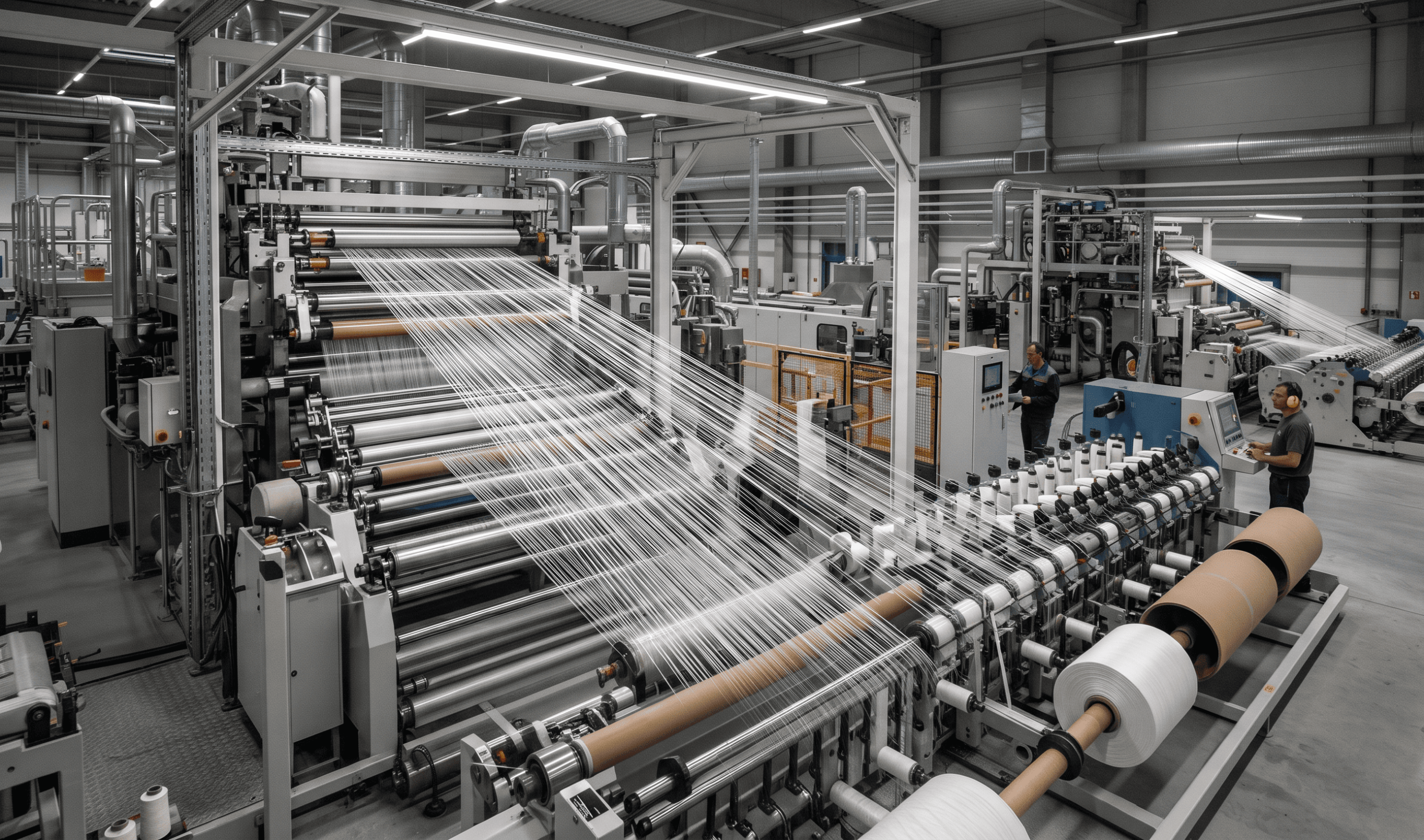
Manufacturers melt polypropylene resin and push it through tiny openings to create filaments. They then stretch, cut, crimp, or process these filaments into different forms.
Common types include:
- Polypropylene staple fiber
- Monofilament
- Multifilament
- Continuous filament
- Crimped fiber
- Nonwoven fiber
For buyers, the key is finding the right specification. Fiber length, denier, strength, color, treatment, and end use can all affect performance.
2. Key Properties of Polypropylene Fiber
PP fiber offers a useful mix of performance and affordability.
Its main properties include:
- Lightweight: Polypropylene has a density of around 0.90 g/cm³.
- Low moisture absorption: PP is hydrophobic and absorbs very little water.
- Chemical resistance: It handles many chemicals well.
- Abrasion resistance: It suits applications that involve repeated friction.
- Good strength: Properly produced PP fibers provide useful mechanical performance.
- Low thermal conductivity: This helps in selected thermal applications.
- Recyclability: Suitable recycling systems can process PP into new products.
For manufacturers, these properties make polypropylene a practical choice when both performance and cost matter.

3. Polypropylene Fiber Uses in Construction
Construction represents one of the major applications for PP fiber.
Manufacturers can mix concrete reinforcement fiber into concrete and cement products to help control cracking and improve resistance to certain stresses.
Benefits of polypropylene in concrete include:
- Helps control plastic shrinkage cracking
- Improves impact resistance
- Provides distributed reinforcement
- Supports surface durability
PP fiber does not replace every type of structural reinforcement. The right fiber, dosage, concrete mix, and project requirements should guide your selection.
For buyers, the cheapest option may not deliver the best value. The material must meet the project’s actual specifications.
VERTEX supports international buyers through its Fiber & Polymer Import/Export services.
4. Geotextiles and Infrastructure
Much of important construction work happens below the surface.
Road foundations, drainage systems, erosion control, and soil stabilization need materials that can handle moisture and demanding conditions.
Manufacturers use polypropylene geotextiles for:
- Soil separation
- Filtration
- Drainage
- Erosion control
- Ground stabilization
- Road construction
PP works well in these applications because it is lightweight, moisture resistant, chemically resistant, and suitable for large-scale production.
If you are sourcing polypropylene fiber for geotextile membranes, consistent specifications can help you maintain the quality of the finished product.

5. Nonwoven Fabrics and Hygiene Products
Polypropylene also plays a major role in nonwoven fabrics.
Manufacturers use it for products such as:
- Diapers
- Wipes
- Medical disposables
- Protective garments
- Hygiene products
- Filtration materials
Polypropylene nonwoven for diapers remains popular because PP offers lightweight performance and very low moisture absorption.
However, not every PP grade suits medical, food, or hygiene applications. Buyers should check the grade, additives, certifications, testing requirements, and regulations for their target market.
6. Ropes, Automotive Products and Industrial Applications
PP fiber does not stay in one industry.
Manufacturers also use it for:
- Ropes and twines
- Technical textiles
- Filtration media
- Automotive interiors
- Agriculture products
- Packaging
- Industrial fabrics
- Selected thermal products
Polypropylene rope and twine applications benefit from PP’s low weight and low moisture absorption.
Its versatility also makes it useful for products where weight, durability, and cost all matter.
You can learn more about VERTEX’s work with these materials through our Fiber & Polymer Import/Export post.

7. PP Fiber vs Polyester Fiber
Comparing PP fiber vs polyester fiber? The better option depends on your application.
Polypropylene may suit you when you need:
- Very low weight
- Very low moisture absorption
- Strong chemical resistance
- Cost efficiency
- Performance in many technical applications
Polyester may suit you when you need:
- Higher heat resistance
- Better UV performance in many applications
- Easier dyeing
- Specific textile characteristics
There is no universal winner. Your product requirements should determine the material.
8. Limitations of Polypropylene Fiber
PP fiber offers many advantages, but buyers should also understand its limitations.
- Lower heat resistance: Polypropylene melts at roughly 165°C.
- UV sensitivity: Outdoor applications may need UV stabilization.
- Limited post-production dyeing: Manufacturers normally add color during production.
- Color planning: Producers typically introduce pigments or masterbatch during extrusion.
For outdoor products, UV-stabilized polypropylene fiber may provide a better solution.
Before placing a bulk order, confirm the application, color, additives, performance requirements, and testing standards.

9. How Is Polypropylene Fiber Produced?
The basic melt spinning process for PP fiber follows several steps:
- Manufacturers melt polypropylene resin.
- They push the molten polymer through spinnerets.
- The process creates fine filaments.
- The filaments cool and undergo drawing.
- Producers cut, crimp, or convert the fibers into nonwoven materials.
Different production methods create different fiber characteristics. That is why buyers should look beyond price and compare specifications, quality, packaging, production capacity, documentation, and delivery requirements.
Frequently Asked Questions
What is polypropylene (PP) fiber?
Polypropylene fiber is a synthetic fiber made from polypropylene, a thermoplastic polymer. Manufacturers use it in construction, geotextiles, technical textiles, nonwovens, ropes, filtration, and industrial products.
What are the key properties of polypropylene fiber?
PP fiber is lightweight, hydrophobic, chemically resistant, abrasion resistant, and relatively strong. Its low density also makes it lighter than many common synthetic fibers.
Why is polypropylene fiber popular in manufacturing?
Manufacturers value PP for its low weight, moisture resistance, chemical stability, versatility, and cost efficiency across different applications.
What are the main applications of polypropylene fiber?
Major applications include concrete reinforcement, geotextiles, hygiene nonwovens, ropes, twines, filtration media, automotive interiors, technical textiles, and industrial products.
Is polypropylene fiber recyclable?
Yes. Suitable recycling systems can process polypropylene into new plastic products and, depending on the material and process, selected fiber applications.
Final Thoughts
Polypropylene fiber is simple, practical, and remarkably versatile.
Its combination of low weight, moisture resistance, chemical resistance, durability, and cost efficiency explains why manufacturers continue to choose it for construction, geotextiles, hygiene, automotive, and technical textile applications.
For international buyers, successful sourcing involves more than finding the lowest price. You also need consistent quality, correct specifications, reliable supply, proper documentation, and dependable logistics.
To learn more about VERTEX and our global sourcing approach, visit the About VERTEX page.
If you need polypropylene fiber or other industrial materials for a bulk order, contact VERTEX with your specifications and sourcing requirements.
