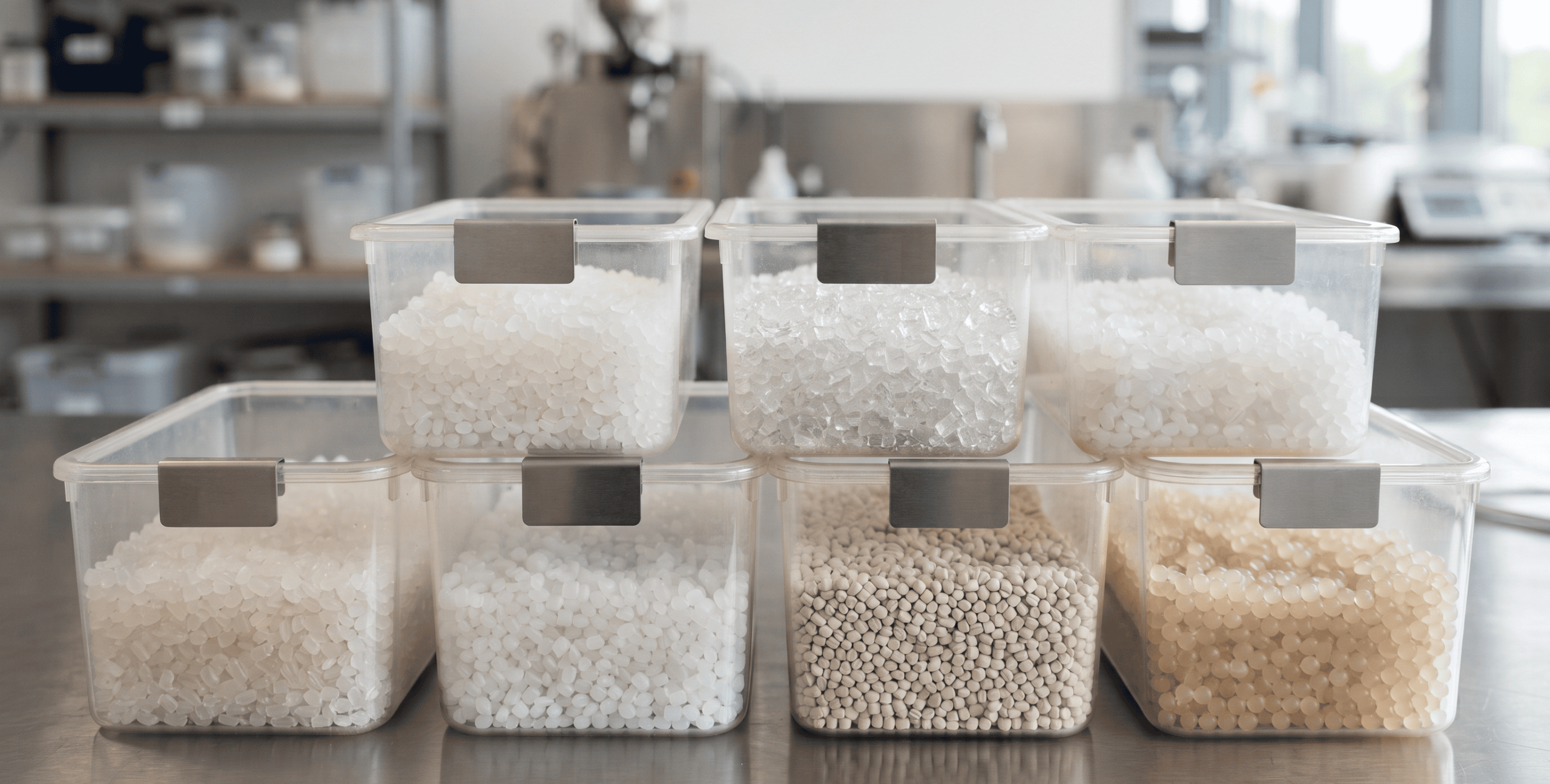

Many everyday products start with something surprisingly small: polymer pellets. Before a bottle, pipe, package, automotive part, appliance component, or synthetic fiber reaches you, its production may begin with these tiny pieces of plastic resin.
For importers, overseas buyers, international distributors, wholesalers, and buying agents, understanding polymer pellets can help you make better sourcing decisions.
At VERTEX Supply Networks, fiber, polymer, and industrial material sourcing is part of a wider international supply network. Here is what you need to know before choosing your next resin.
1. What Are Polymer Pellets?
Polymer pellets are small, uniform pieces of thermoplastic resin used as raw materials for manufacturing.
The process is simple to understand. Pellets enter production equipment, where heat melts them. The molten polymer is then shaped into a finished product through processes such as injection molding, extrusion, or blow molding.
You may also hear:
- Plastic resin pellets
- Polymer granules
- Thermoplastic pellets
- Plastic pellets
- Resin pellets for manufacturing
- Industrial polymer pellets
These terms can overlap, but the polymer grade and technical specifications are what matter when you are buying for production.

2. What Are Polymer Pellets Used For?
Polymer pellets are used across many industries because different resin grades can be processed into a wide range of products.
Common applications include:
- Injection molding: Caps, containers, automotive parts, appliances, and consumer products
- Extrusion: Pipes, sheets, profiles, films, and insulation
- Blow molding: Bottles and hollow containers
- Film production: Flexible packaging and industrial films
- Fiber production: Synthetic fibers, textile filaments, and nonwovens
- Industrial manufacturing: Electrical, construction, medical, and technical products
For buyers looking for international sourcing support, VERTEX’s Fiber & Polymer Import/Export service covers this area of its supply network.
3. Which Polymers Are Available in Pellet Form?
The right resin depends on your product, equipment, production method, and performance requirements.
Common polymer granules include:
- Polyethylene: HDPE, LDPE, LLDPE, and metallocene LLDPE
- Polypropylene: Homopolymer, random copolymer, and impact copolymer
- PET: Bottles, packaging, and fibers
- PVC: Pipes, profiles, cables, and construction products
- ABS: Durable molded components
- Polystyrene: Packaging and molded products
- Polycarbonate: Applications requiring strength and impact resistance
- Polyamide or nylon: Technical and engineering products
- Thermoplastic elastomers: Flexible applications
- PLA and other bio based polymers: Selected bio based applications
PP and polyethylene are among the most widely used thermoplastics, making them important materials for global buyers.
4. Virgin vs Recycled Polymer Pellets
Choosing between virgin polymer pellets and recycled plastic pellets depends on your application.
Virgin pellets are produced from newly polymerized resin and generally provide more predictable:
- Melt flow
- Color
- Mechanical properties
- Contamination levels
- Processing behavior
Recycled pellets come from reprocessed post industrial or post consumer plastic. They can offer cost and resource efficiency benefits, but consistency depends on sorting, washing, filtration, compounding, and testing.
The cheapest option is not always the best option. Your finished product and production requirements should guide the decision.
5. What Are Compounded Polymer Pellets?
Sometimes a standard resin does not provide the performance your product needs. Compounded polymer pellets solve this by combining a base polymer with additives, fillers, pigments, or reinforcement.
Examples include:
- Glass fiber reinforced nylon
- UV stabilized polypropylene
- Flame retardant ABS
- Mineral filled HDPE
- Impact modified engineering plastics
- Slip or antiblock modified film resin
- Pre colored compounds
When buying compounded material, tell your supplier what you are manufacturing, which process you use, and what properties the final product needs.
6. How Are Polymer Pellets Made?
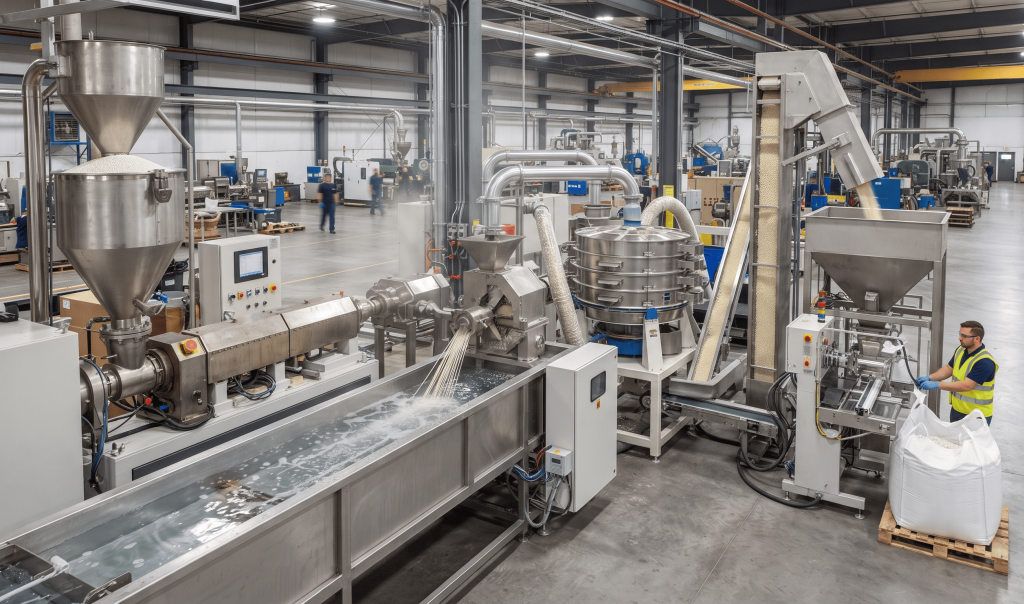
The basic polymer pellet manufacturing process involves:
- Mixing resin with additives
- Melting and mixing the material in an extruder
- Pushing the molten polymer through a die
- Cooling the material
- Cutting it into uniform pellets
- Screening and removing unsuitable material
- Testing, drying, and packaging
Consistent pellet size helps production equipment feed and process the material more reliably.
7. Why Do MFI, MFR, and Moisture Matter?
If you are sourcing polymer pellets for injection molding or extrusion, technical specifications are important.
MFI or MFR describes the flow behavior of molten polymer under specified test conditions. Higher MFR generally means easier flow, while lower MFR materials can provide greater melt strength for applications such as pipes, blow molding, and heavy duty films.
Always compare MFR values using the same testing conditions and standard.
Moisture can also affect processing. Excess moisture may cause:
- Bubbles and voids
- Silver streaks or splay
- Material degradation
- Reduced strength
- Poor surface appearance
- Processing instability
PET, nylon, PC, and PBT often require controlled drying. PE and PP are generally less moisture sensitive but should still be stored clean and dry.

8. How Should You Store Plastic Resin Pellets?
Proper storage protects material quality.
You should:
- Keep pellets in sealed original packaging
- Protect them from humidity and rain
- Avoid direct sunlight
- Store bags on pallets
- Keep storage areas clean
- Prevent contact with dust and chemicals
- Record lot numbers and manufacturing dates
- Follow FIFO or FEFO practices where applicable
9. What Should Buyers Check Before Ordering?
Do not judge polymer pellets by price alone. Before a bulk purchase, request relevant documentation such as:
- Certificate of Analysis (COA)
- Technical Data Sheet (TDS)
- Safety Data Sheet (SDS)
- Lot or batch information
- MFI or MFR results
- Density and moisture information where applicable
- Color and contamination data where relevant
- Regulatory or food contact declarations when required
- Recycled content verification where applicable
- Certificate of origin
- Packing and shipping details
Also confirm that the grade suits your production process, equipment, product design, performance requirements, regulations, and target cost.
A production trial using the exact grade is preferable to choosing resin based only on a generic polymer name.

Frequently Asked Questions
What are polymer pellets?
Polymer pellets are small thermoplastic resin pieces used as raw materials for manufacturing through injection molding, extrusion, blow molding, and other processes.
What are polymer pellets used for?
They are used for packaging, bottles, containers, pipes, films, automotive parts, appliances, synthetic fibers, electrical products, and many other industrial goods.
What is the difference between virgin and recycled pellets?
Virgin pellets are produced from newly polymerized resin and generally offer more predictable properties. Recycled pellets are reprocessed from plastic waste and can provide cost and resource efficiency benefits when properly processed and tested.
What does MFI or MFR mean?
MFI and MFR describe the flow behavior of molten polymer under specified testing conditions. They help manufacturers select suitable resin for different production processes.
How should polymer pellets be stored?
Keep them sealed in a clean, dry area away from moisture, sunlight, chemicals, dust, and contamination. Store bags on pallets and maintain proper batch tracking.
Conclusion
The finished product may get all the attention, but manufacturing often starts with the right raw material.
Choosing suitable polymer pellets can influence processing consistency, product quality, production efficiency, and material costs. Whether you need PP pellets for manufacturing, HDPE, LDPE, LLDPE, PET, or other industrial polymers, the grade needs to match your application.
For overseas buyers, importers, distributors, wholesalers, and buying agents, reliable sourcing means more than competitive pricing. You also need suitable specifications, quality documentation, dependable supply, and international logistics support.
Learn more about VERTEX through the About Us page or explore the Fiber & Polymer Import/Export resource.
For your next sourcing requirement, contact VERTEX through the Contact Us page and discuss your polymer specifications and bulk supply needs.
