

When you import fiber or polymer materials, fiber and polymer quality control is about more than checking the product after it arrives. You need consistent quality, proper documentation, reliable sourcing, and smooth international delivery.
That is why quality control matters from the beginning.
VERTEX Supply Networks connects suppliers, manufacturers, brands, distributors, and international buyers through a global supply network. For importers, overseas buyers, international distributors, wholesalers, and buying agents, the goal is simple: make sourcing more organized, transparent, and dependable.
1. Quality Starts With the Right Supplier
A quality shipment starts long before the container reaches the port.
When you source fiber or polymers internationally, the supplier behind the material matters just as much as the product itself. A suitable supplier should meet agreed specifications, provide required documents, and maintain consistent production standards.
Important supplier evaluation criteria can include:
- Product grade and specifications
- Manufacturing capabilities
- Quality control procedures
- Product consistency
- Required documentation
- Packaging requirements
- Export capabilities
- Delivery requirements
A cheaper supplier may look attractive at first. But if the next batch performs differently from the first, that saving can disappear quickly.
Reliable quality is usually worth more than a small difference in price.
2. Fiber and Polymer Quality Control Goes Beyond Final Inspection
Good quality control is not one quick check before loading a container.
VERTEX’s Fiber & Polymer Import/Export service supports businesses looking to source and move industrial materials through international markets.
For fiber and polymer shipments, quality management can involve:
- Supplier selection
- Product specification review
- Material testing
- Batch documentation
- Packaging and labeling checks
- Shipment documentation
- Delivery coordination
This gives buyers better visibility into what they are purchasing and helps reduce communication gaps.

3. Batch Testing Helps Keep Quality Consistent
Every batch deserves attention because fiber and polymer quality control depends on consistent testing from one shipment to the next.
Fiber and polymer properties can vary depending on the material, production process, grade, and application. That is why batch-level testing is an important part of quality assurance.
Depending on the product, testing may include:
- Melt flow rate or melt flow index
- Density or specific gravity
- Moisture
- Tensile properties
- Color consistency
- Thermal properties
- Ash content
- Surface appearance
- Contamination
- Application-specific performance
For polypropylene and other thermoplastics, MFR testing methods can help determine how material flows under defined conditions.
The important question is not simply, “Was the material tested?”
Ask instead:
“Was it tested against the specification that matters for my application?”
4. Certificate of Analysis for Polymer Quality Control
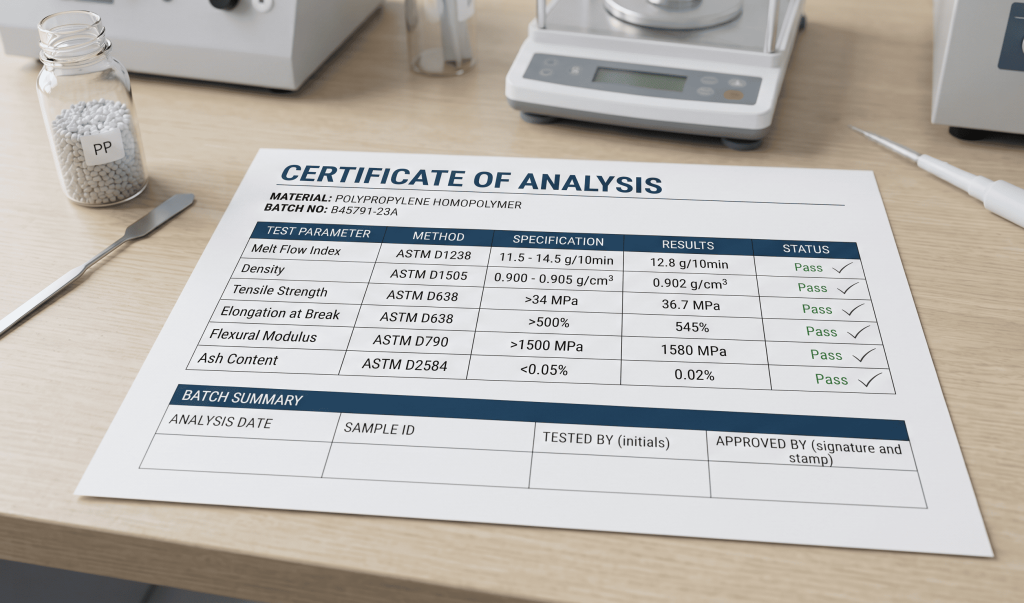
A Certificate of Analysis (CoA) provides a quality snapshot of a particular batch. It helps buyers compare delivered material with the agreed specification.
Depending on the product, a CoA may include:
- Product name and grade
- Batch or lot number
- Production information
- Melt flow rate or melt flow index
- Density
- Moisture
- Other relevant test results
- Applicable compliance information
How to Verify Polymer CoA Authenticity
When you receive a CoA, compare it with the physical shipment.
Check:
- Product grade
- Lot or batch number
- Production information
- Test results
- Package quantity
- Supplier details
If something does not match, ask about it before the material enters production.
5. Traceability in Fiber and Polymer Quality Control
Imagine discovering a quality issue several weeks after delivery.
You need to know which batch was involved, who supplied it, what specification was agreed, what testing was completed, and which shipment contained the material.
That is why traceability in polymer manufacturing and supply processes matters.
A practical system can connect:
- Supplier
- Product grade
- Batch or lot number
- Test results
- Quality documents
- Packaging
- Shipment
- Buyer
Good traceability makes investigations easier and supports corrective action when material does not meet requirements.
6. Quality Documentation for International Shipments
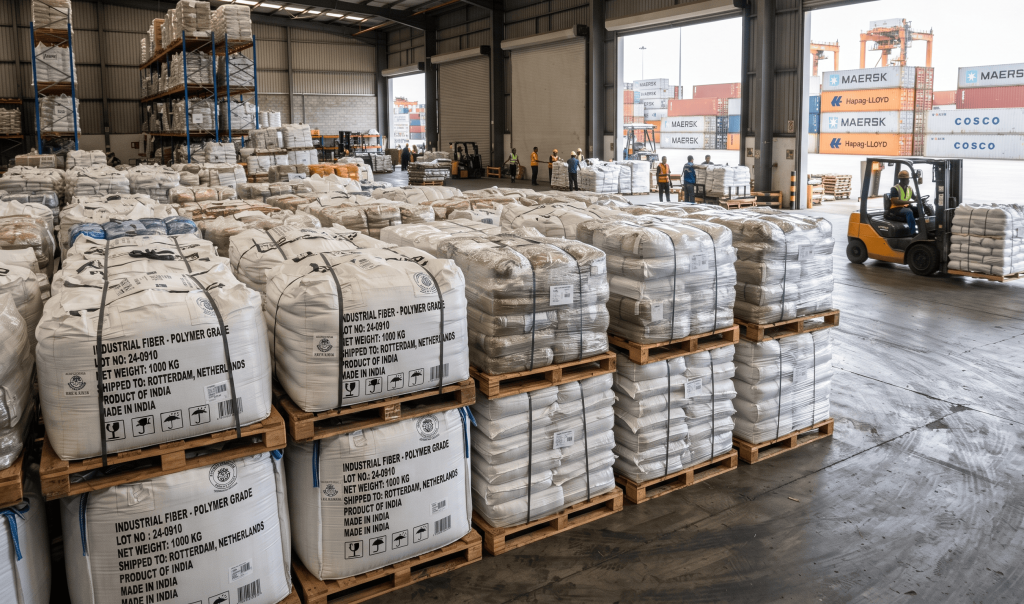
For international buyers, quality is not only about what is inside the bags. The paperwork matters too.
Depending on the product and destination, a shipment may require:
- Commercial invoice
- Packing list
- Bill of lading
- Certificate of Origin
- Certificate of Analysis
- Safety Data Sheet
- Applicable compliance declarations
Some buyers may also need information related to REACH and RoHS compliance for polymer shipments.
Requirements vary, so confirm the necessary documents before shipment.
7. Testing Should Match the Final Application
Not every fiber or polymer needs the same quality checks.
A material used for packaging may have different requirements from one used for automotive parts, textiles, pipes, or composite products.
For fiber-reinforced composites, non-destructive testing (NDT) can include:
- Visual inspection
- Ultrasonic testing
- Radiographic testing
- Thermography
- Other application-specific methods
For pipe-grade polymers, testing may focus on different performance requirements, including hydrostatic strength.
The point is simple:
Choose testing because it matters to your application, not simply because it is available.
8. What Happens When a Batch Does Not Meet Requirements?
Quality control is not about pretending problems never happen.
A strong supplier quality process should identify and manage nonconforming material.
This can involve:
- Identifying the affected batch
- Recording the quality issue
- Finding the possible cause
- Checking other affected batches
- Agreeing on corrective action
- Preventing the issue from happening again
This is where corrective action systems for nonconforming polymer batches become valuable.
The goal is not only to fix one problem. It is to improve the process.
9. 5 Questions to Ask About Fiber & Polymer Quality
Before placing your next international order, ask:
- Can you provide batch-specific quality documentation?
- Which tests are performed for this material grade?
- How are batch and lot numbers tracked?
- Which compliance documents will come with the shipment?
- What happens if the material does not meet the agreed specification?
Clear answers can tell you a lot about how seriously a supplier treats quality.

10. VERTEX Connects Quality With Global Supply
According to the company’s About VERTEX page, VERTEX Supply Networks operates as a multi-industry global supply network connecting suppliers, manufacturers, brands, distributors, and international buyers.
For fiber and polymer buyers, the focus is not simply finding a product. It is supporting the wider sourcing process through:
- Reliable supplier sourcing
- Product specifications
- Quality control
- Documentation
- Traceability
- International logistics
- Clear communication
- Long-term supply relationships
That combination can make international sourcing easier to manage.
Frequently Asked Questions
What certifications should a fiber/polymer supplier hold?
Look for relevant certifications such as ISO 9001 for quality management. Depending on the material and industry, ISO 14001, ISO 45001, or industry-specific certifications may also be relevant. Always verify current certification documents.
What is a Certificate of Analysis (CoA) and why is it critical?
A CoA provides test results for a specific material batch. It helps buyers compare the delivered product with the agreed specification.
What must every CoA contain for polymer shipments?
A CoA should identify the product and batch and provide relevant test results. Exact requirements vary by material, application, supplier, and destination.
What key tests should I verify on every polymer shipment?
The right tests depend on the grade and application. Common checks can include MFR, density, moisture, color, contamination, thermal properties, and mechanical performance.
Why Is Traceability Important in Polymer Quality Assurance?
Traceability connects material with its supplier, batch, testing information, documentation, and shipment. This helps buyers investigate quality issues and manage corrective actions.
Conclusion
When you import fiber or polymers, you are depending on more than the material itself. You need consistent quality, proper documentation, reliable sourcing, and clear communication.
That is why fiber and polymer quality control should cover more than final inspection.
Supplier evaluation, batch testing, Certificates of Analysis, traceability, compliance documents, application-specific testing, and corrective action all have a role to play.
VERTEX aims to make global sourcing more organized, transparent, and dependable for international buyers.
Looking for fiber or polymer materials for manufacturing, distribution, or international trade? Contact VERTEX about your product specifications and sourcing requirements.
