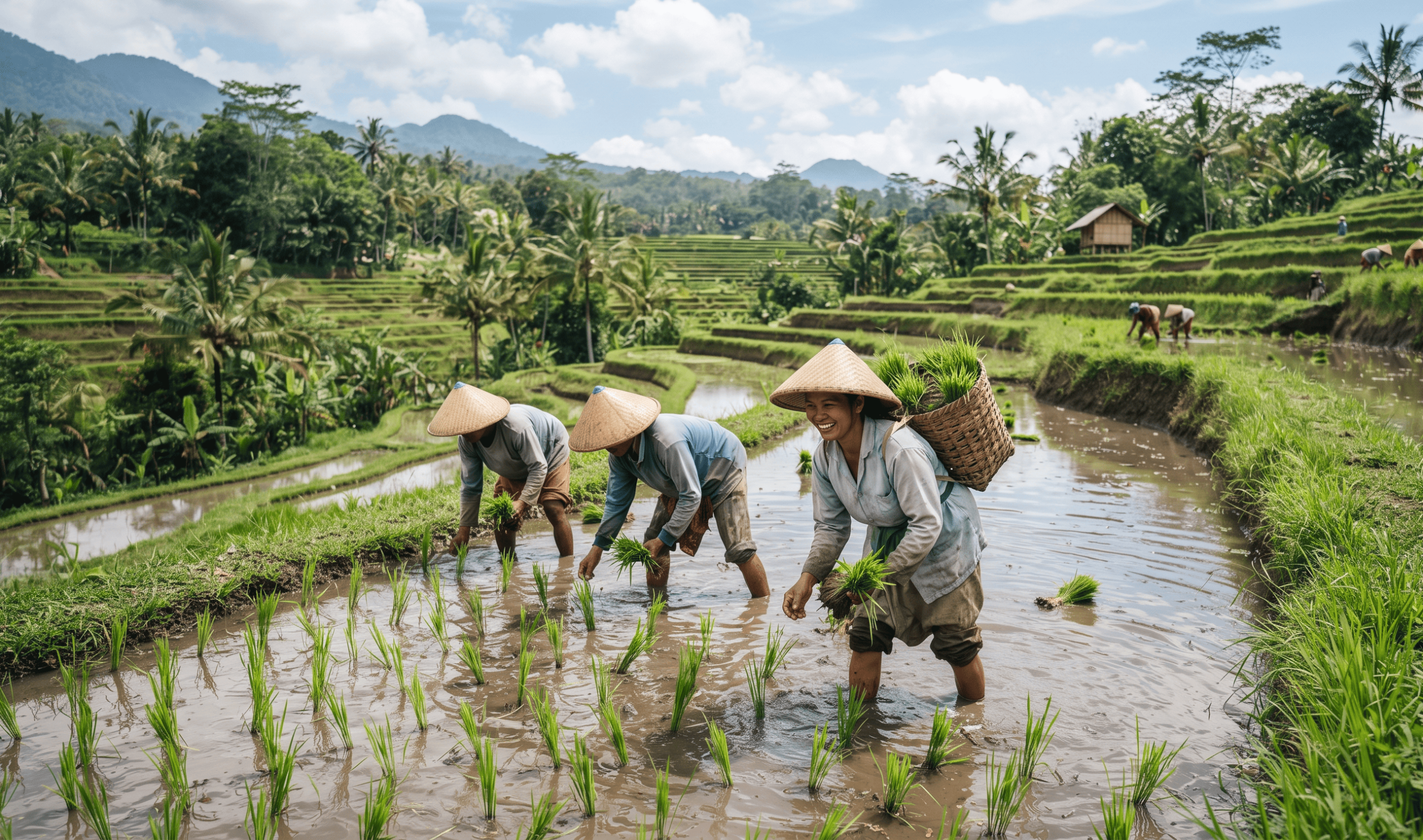

Rice may look simple on your plate, but getting reliable rice from a farm to an overseas buyer is anything but simple. Sustainable rice farming plays an important role in keeping production resilient while supporting farmers, protecting natural resources, and strengthening the supply chain.
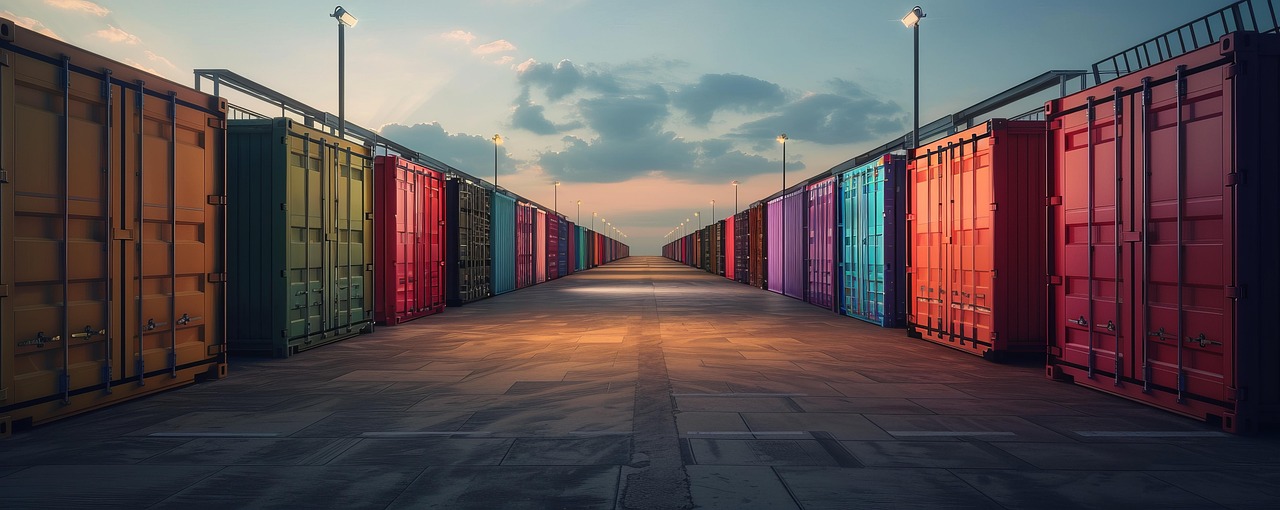
For importers, wholesalers, food manufacturers, and international distributors, sustainable farming can help create a more dependable sustainable rice supply chain. Farmers, mills, quality teams, packaging, logistics, and exporters all need to work together to keep rice moving smoothly from the field to the international market.
At VERTEX Supply Networks, we connect trusted producers and suppliers with international buyers through practical sourcing, quality control, and export solutions.
1. Why Sustainable Rice Farming Matters
Rice production faces risks such as water shortages, extreme weather, soil degradation, pests, labor issues, and post harvest losses.
Sustainable rice production aims to reduce these risks while keeping farming profitable and practical.
For bulk buyers, this can support:
- More resilient production
- Better water management
- Reduced resource waste
- Stronger farmer relationships
- Better rice traceability
- More consistent quality
- Improved rice supply reliability
A low price may attract you to a supplier, but consistent quality and dependable delivery are what keep a sourcing relationship valuable.
2. How Ethical Rice Sourcing Supports Reliable Supply
Ethical rice sourcing means looking beyond the price of a shipment. It includes responsible production, fair treatment of farmers and workers, transparency, legal compliance, and traceability.
When farmers have better market access and more predictable demand, they can be in a stronger position to invest in:
- Quality seed
- Irrigation
- Soil management
- Training
- Better harvesting
- Storage and post harvest handling
This creates a healthier supply chain. Farmers benefit from stronger relationships, while buyers gain a more stable sourcing base.
That is why ethical sourcing practices in the rice industry can be part of practical supply chain risk management.
3. Climate Smart Rice Farming Can Reduce Risk
Weather does not follow your purchase order. Drought, flooding, heat, and changing rainfall can all affect rice production.
Climate smart rice farming uses practical methods to help farmers manage these challenges.
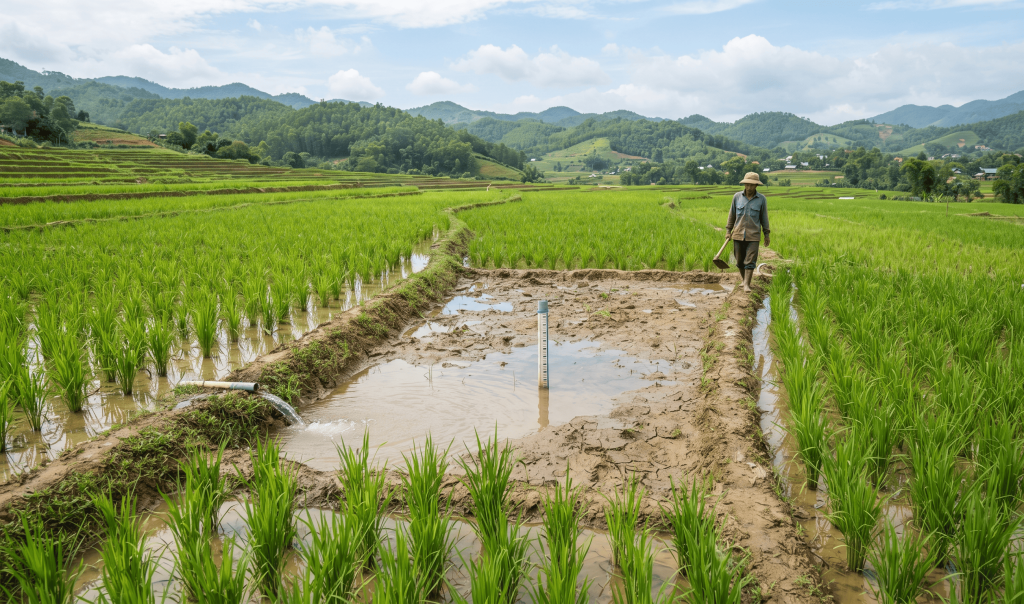
One example is alternate wetting and drying rice irrigation, or AWD. Instead of keeping fields continuously flooded, farmers allow controlled periods of drainage before irrigating again.
When properly managed, AWD can help reduce water use and methane emissions.
Other climate resilient rice farming methods include:
- Choosing suitable rice varieties
- Improving soil health
- Managing fertilizer carefully
- Using water more efficiently
- Preparing for changing weather patterns
4. Rice Traceability Helps Buyers Manage Risk
Imagine finding a quality issue in a large shipment. Your first question will probably be, “Where did this rice come from?”
Without good traceability, answering that question can be difficult.
A traceable process can follow rice through:
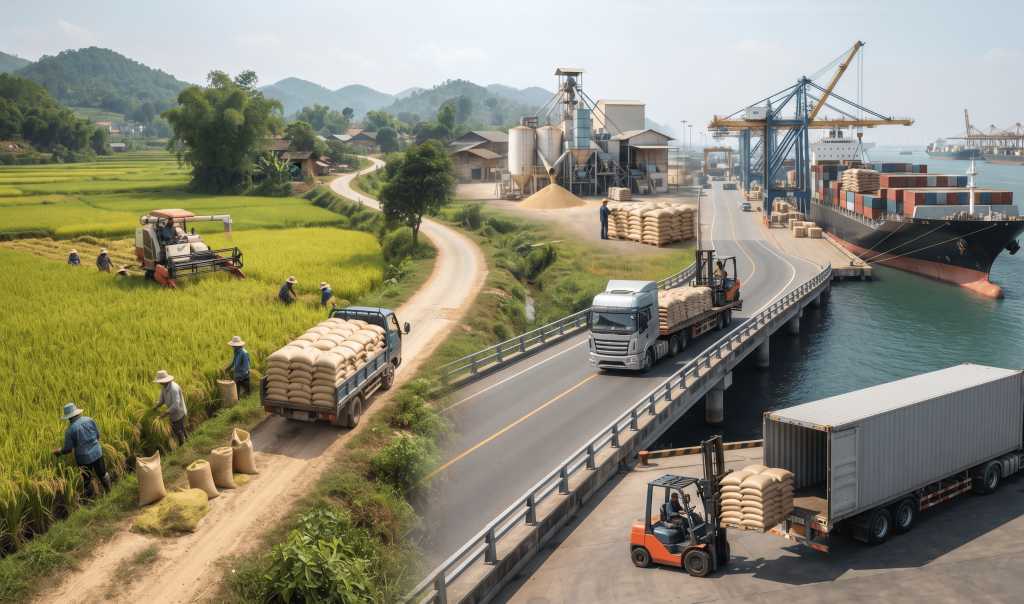
Farm → Collection → Rice Mill → Quality Control → Packaging → Export → Buyer
For overseas buyers, rice traceability can support:
- Supplier verification
- Quality investigations
- Batch management
- Sustainability verification
- Better supply forecasting
If you are wondering how to source traceable rice, ask suppliers about production sources, processing facilities, batch records, quality checks, and certifications.
For buyers seeking an established sourcing process, explore VERTEX’s Rice Supply & Export service.
5. Sustainable Rice Certification Adds Transparency
When you source rice internationally, sustainability claims should be easy to understand and backed by evidence. A supplier’s label alone may not tell you how the rice was produced, verified, or handled.
The Sustainable Rice Platform (SRP) addresses this need through a sustainability standard, performance indicators, assurance procedures, and chain of custody requirements for rice value chains.
For buyers considering SRP Verified rice, checking the relevant verification and supply chain documents is a practical step. These records can give you more confidence in the sourcing process and help you make a better procurement decision.
Organic Rice vs Sustainable Rice
Organic rice is not automatically sustainable rice.
Think of organic certification as one part of a much bigger picture. Sustainable rice sourcing can also consider:
- Water use and conservation
- Soil health
- Methane emissions
- Farmer livelihoods
- Labor practices
- Biodiversity
- Processing methods
- Packaging
- Supply chain traceability
A good supplier evaluation should therefore look at the complete sourcing system. Certification is useful, but it should be considered alongside farming practices, traceability, quality controls, and supply chain management.
6. How to Verify Ethical Rice Suppliers
Finding sustainable rice suppliers for bulk buyers requires more than checking a sample.
Before placing a large order, ask for:
- Farm or producer group traceability records
- Current relevant certifications
- Audit or assurance documents
- Water and soil management information
- Fertilizer and pesticide records where applicable
- Farmer payment and labor policies
- Laboratory reports
- Milling and storage procedures
- Packaging and fumigation information
- Chain of custody records
These checks help you distinguish genuine sourcing practices from vague sustainability claims.

7. Why Farmer Relationships Matter
Sustainability cannot work if farmers carry every cost themselves.
Fair prices, predictable demand, training, and better access to farming resources can help farmers maintain production and improve their methods.
For buyers, farmer stability matters because it supports rice supply reliability.
VERTEX takes a supply network approach that connects farmers, manufacturers, suppliers, and global buyers. Learn more on the About Us page.
8. A Practical Approach to Sustainable Rice Procurement
For importers, distributors, and food manufacturers:
- Define requirements: Variety, grade, volume, packaging, destination, and certifications.
- Evaluate suppliers: Check capacity, quality systems, sourcing, and traceability.
- Verify documents: Review certificates and laboratory reports.
- Ask about farming: Understand water, soil, fertilizer, and climate practices.
- Review processing: Check cleaning, grading, packaging, storage, and export preparation.
- Check logistics: Confirm documentation and shipment coordination.
- Think long term: Build relationships rather than relying on one shipment.
Explore the VERTEX Rice Supply overview for more information.

FAQs About Sustainable Rice Farming
What is sustainable rice farming?
Sustainable rice farming uses methods that manage water and soil responsibly, reduce environmental impact, and support profitable farming over the long term.
How does ethical sourcing affect rice supply reliability?
Ethical sourcing can improve reliability by supporting stronger farmer relationships, predictable demand, better farming practices, and investment in production.
What is ethical rice sourcing?
Ethical rice sourcing means buying from suppliers that demonstrate responsible environmental practices, fair treatment, transparency, legal compliance, and traceability.
How does traceability improve long term rice supply reliability?
Traceability helps buyers identify where rice comes from and how it moves through the supply chain. This makes quality issues easier to investigate and manage.
How can buyers verify a sustainable rice supplier?
Ask for traceability records, certifications, assurance documents, laboratory reports, production information, farmer policies, and processing records.
Conclusion
Sustainable rice sourcing is not simply about choosing a greener product. It is about building a stronger connection between farmers, sourcing, quality, processing, logistics, and international trade.
For overseas buyers, look beyond price. Consider traceability, ethical sourcing, quality control, farmer relationships, certification, production resilience, and export capability.
VERTEX helps businesses source rice through a connected supply network focused on reliable sourcing, quality, transparency, and global delivery.
Have specific rice sourcing requirements? Visit the Contact Us page to discuss your requirements.
The strongest rice supply chain is not the one that delivers once. It is the one you can depend on again and again.
