



A spice may look simple when it reaches your factory, but its journey can be surprisingly long. Direct farm spice sourcing helps shorten that journey by connecting buyers more closely with farmers and the original growing areas. Instead of passing through several unnecessary hands, spices can move through a more controlled sourcing process.
For importers, overseas buyers, international distributors, wholesalers, and buying agents, this closer connection can improve visibility over harvesting, drying, quality checks, packaging, and transportation. It can also support better freshness, traceability, and supply consistency.
At VERTEX Supply Networks, the focus is on practical spice sourcing and supply solutions that help international buyers connect with reliable suppliers and manage their sourcing requirements more efficiently.
1. Why Direct Farm Spice Sourcing Matters
Traditional spice supply can involve several intermediaries before the product reaches your factory. Every extra stage can add storage time, handling, moisture exposure, and traceability gaps.
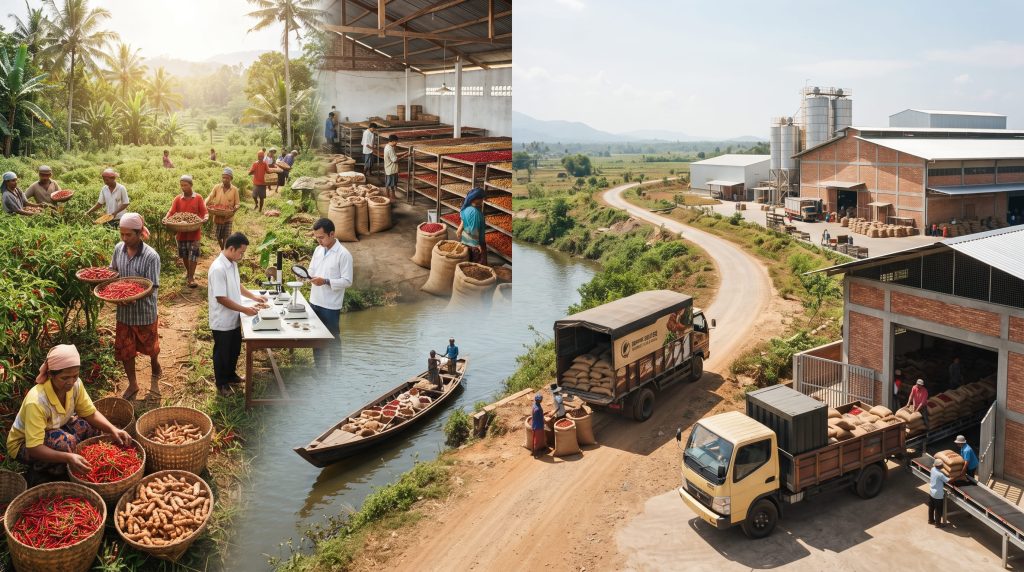
With farm-direct spice procurement, the route can be easier to manage:
- Farm
- Harvest
- Cleaning
- Drying
- Grading
- Quality testing
- Packaging
- Export
- Factory
Direct farm spice sourcing does not automatically guarantee perfect quality. It gives you more visibility and more opportunities to control quality.
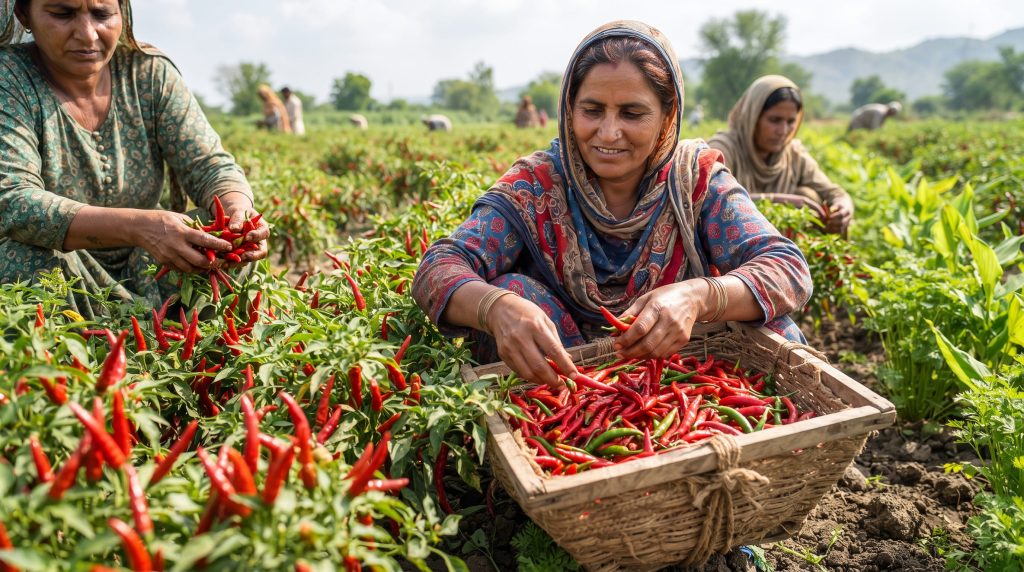
2. Freshness Starts at the Farm
Good fresh spice sourcing starts before the crop leaves the field.
Harvest timing, crop maturity, variety, and initial handling can affect aroma, color, flavor, and overall quality. This is especially important for products such as:
- Red chili
- Turmeric
- Cumin
- Coriander
- Garlic
- Black pepper
- Cardamom
- Cinnamon
Clear farm-level requirements can help buyers maintain more consistent specifications across different lots.
Learn more about VERTEX and its supply approach through the About Us page.
3. Post-Harvest Handling Protects Quality
Harvesting is only the beginning. Post-harvest handling of spices can strongly affect the final product.
Drying
Spices need controlled drying to reach a suitable moisture level. Too much moisture can encourage mold, microbial growth, caking, and deterioration.
Excessive heat can also affect natural color, aroma, and volatile compounds. The right drying method depends on the spice, form, market, and product specification.
Cleaning and Grading
Cleaning helps remove foreign matter, while grading creates more consistent commercial lots.
For dedicated sourcing and export support, explore VERTEX’s Spices Supply & Export services.
4. Moisture Control Helps Protect Freshness
Spice moisture control after harvesting is an important part of quality management.
A shipment may look fine when it leaves the supplier but develop problems later if moisture is not properly controlled.
Depending on the product and testing requirements, moisture may be checked through:
- Loss on drying
- Oven testing
- Halogen moisture analysis
- Karl Fischer titration where greater precision is needed
There is no single moisture target for every spice, so specifications should be product-specific.
5. Whole Spices Can Help Retain Aroma
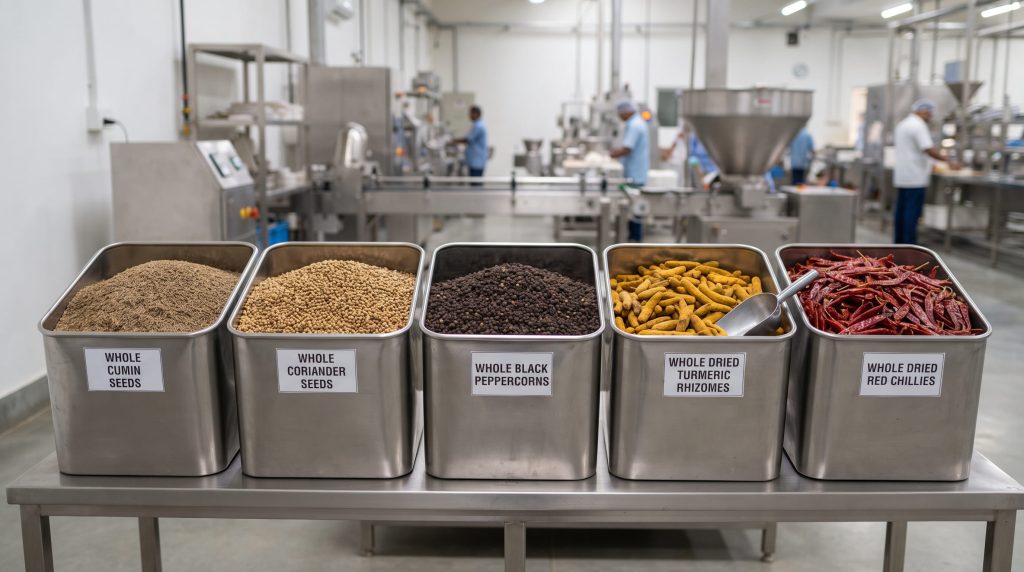
For direct sourcing of whole spices for manufacturers, whole products can be practical for long-distance supply.
Grinding increases surface area and exposes more of the spice to oxygen, which can accelerate aroma loss.
For suitable products, a practical route can be:
Whole spice → Quality checks → Packaging → Transport → Factory → Milling
Final milling should still follow appropriate hygiene and food safety controls.
6. Packaging Protects Freshness During Export
Good spices can lose quality if packaging is unsuitable.
The best packaging for bulk spices depends on the product, shipping distance, humidity, storage conditions, and required shelf life.
Options may include:
- Food-grade lined bags
- Hermetic bags
- High-barrier laminated packaging
- Sealed bulk containers
- Protective pallet wrapping
The goal is to reduce exposure to moisture, oxygen, pests, light, and contamination.

7. Farm-to-Factory Traceability Gives Buyers More Control
Farm-to-factory spice traceability helps you understand where a spice came from and how it moved through the supply chain.
A useful system can connect:
- Farm or grower group
- Harvest date
- Harvest lot
- Collection
- Processing
- Quality testing
- Packaging
- Shipment
- Factory intake
Records can include supplier details, lot numbers, harvest records, testing documents, certificates of analysis, and transport information.
For more information, see VERTEX’s Spices Supply page.
8. Direct Sourcing Still Needs Quality Testing
Direct sourcing does not automatically guarantee higher quality. A proper spice quality control program is still essential.
Depending on the spice and destination market, checks may include:
- Appearance, color, and aroma
- Moisture and water activity
- Foreign matter and insects
- Microbiological safety
- Pesticide residues
- Heavy metals
- Mycotoxins
- Adulteration and artificial colors
- Essential oils or volatile compounds
- Pungency for suitable chili products
Testing should match the product specification and destination-market requirements.
9. Can Direct Farm Sourcing Reduce Procurement Costs?
It can, but the purchase price is only one part of the calculation.
The benefits of buying spices directly from farmers may include:
- Fewer intermediary margins
- Better supply visibility
- Fewer quality-related losses
- Better communication
- Improved traceability
- Fewer unnecessary delays
Direct sourcing may also require investment in testing, storage, logistics, packaging, and supplier development.
10. How to Build a Reliable Farm-to-Factory Supply Chain
Before placing an order, define your requirements clearly.
Your sourcing specification should cover:
- Origin and supplier
- Spice variety and grade
- Harvest period
- Moisture specification
- Food safety requirements
- Pesticide requirements
- Testing and sampling
- Packaging
- Lot and batch traceability
- Delivery and rejection terms
This creates a repeatable process and makes future orders easier to manage.
Frequently Asked Questions
What is direct farm sourcing for spices?
It means buying spices from farmers, cooperatives, grower groups, or managed agricultural networks instead of relying on several traders and aggregators.
How does direct sourcing protect spice freshness?
It can reduce the time and number of storage and handling stages between harvest and factory intake. Proper drying, packaging, transport, and storage remain essential.
Why is the harvest date important when buying spices?
It helps buyers understand product age, manage stock rotation, support traceability, and evaluate freshness over time.
Which spices benefit most from farm-direct sourcing?
Aromatic spices such as red chili, cumin, coriander, turmeric, garlic, black pepper, cardamom, and cinnamon can benefit from controlled sourcing and careful handling.
What quality tests should be performed before factory acceptance?
Depending on the product, buyers may test moisture, microbiology, pesticide residues, heavy metals, mycotoxins, foreign matter, adulteration, volatile oils, and pungency.
Conclusion: Freshness Starts Before the Factory
Spice freshness preservation does not begin when a shipment reaches your factory. It starts at the farm and continues through harvesting, drying, cleaning, testing, packaging, storage, and transportation.
For importers, overseas buyers, distributors, wholesalers, and buying agents, a well-managed farm-to-factory spice supply chain can provide better visibility, stronger quality control, and more dependable supply.
VERTEX supports businesses with spice sourcing, processing, packaging, logistics, and export solutions for international markets.
Looking for spice sourcing from farmers in Pakistan? Visit the Contact Us page to discuss your product, quantity, quality, packaging, and destination-market requirements.
