

When you are ordering uniforms for 20 or 30 people, things are usually simple. But once your requirement reaches 500, 1,000, or even more garments, corporate uniforms bulk orders become a serious procurement task.
You are not simply buying shirts and adding a company logo. You need the right fabric, accurate sizing, consistent colors, reliable branding, quality production, proper packaging, and a delivery plan that keeps everything on track.
For importers, overseas buyers, international distributors, wholesalers, and buying agents, the goal is straightforward: get consistent, good-quality apparel at scale without creating unnecessary supply chain problems.
That starts with choosing a reliable manufacturing and sourcing partner who understands both your product requirements and your market.
1. Get Your Apparel Specifications Right
Before you ask for a quotation, take a little time to decide exactly what you need.
Your bulk apparel specification should include:
- Garment type and style
- Fabric composition
- Fabric GSM
- Colors and approved color references
- Size range and quantity per size
- Logo placement and dimensions
- Embroidery or printing requirements
- Labels and care instructions
- Packaging requirements
- Delivery location and deadline
Think of this as your product blueprint. The clearer it is, the easier it becomes for your supplier to understand your expectations.
VERTEX Supply Networks supports businesses with fabric sourcing, garment manufacturing, sampling, bulk production, finishing, and export logistics. Explore VERTEX’s apparel manufacturing services to see how these stages can work together.
2. Pick Fabric for the Actual Job
A uniform may look great in a product photo, but employees will eventually have to wear it for hours. That makes comfort and durability important.
Depending on the role, you may consider:
- Cotton: Comfortable and breathable for everyday office environments
- Poly cotton blends: Practical, durable, and easier to maintain
- Performance fabrics: Useful for active, outdoor, or demanding roles
- Specialty fabrics: Suitable when you need a particular appearance or performance
For overseas buyers, fabric consistency is also important. You do not want your first shipment to feel completely different from your second.
VERTEX works with fabric sourcing and garment manufacturing requirements for different markets and applications. You can also learn more through its Clothing & Fabric resources.
3. Always Approve a Sample First
This is one step I would not skip.
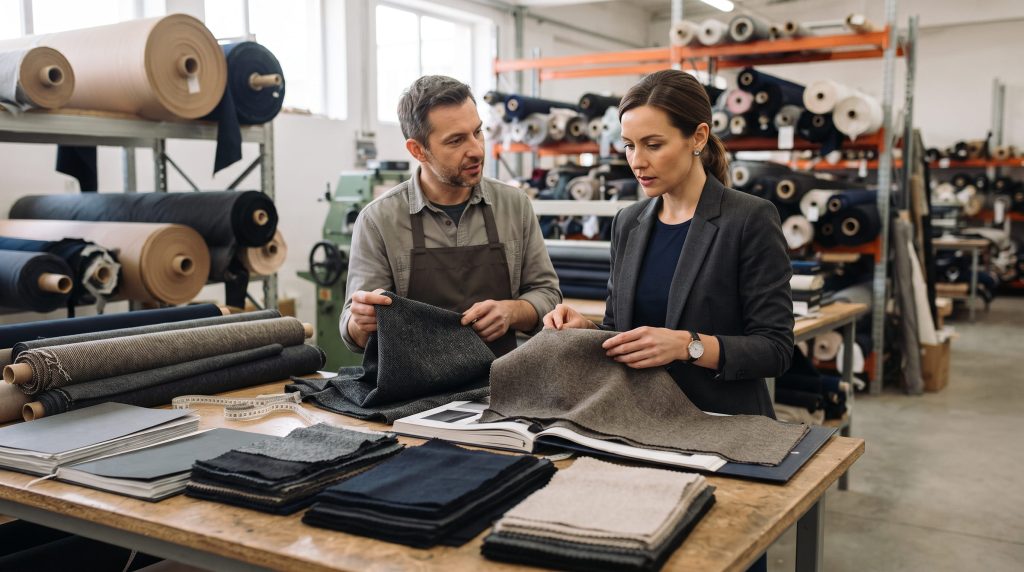
A product photograph can look perfect. A physical sample tells you whether the garment actually feels, fits, and looks right.
Before approving production, check:
- Fabric weight and feel
- Actual garment measurements
- Stitching and finishing
- Color accuracy
- Logo size and placement
- Embroidery or printing quality
- Buttons, zippers, and other details
Once you approve the sample, keep it as a reference for bulk production and future orders.
For custom corporate uniforms, this simple step can save you from a very expensive lesson later.
4. Look Beyond the Unit Price
When comparing corporate uniforms bulk quotations, the cheapest price is not always the best deal.
Ask what is included in the quotation:
- Garment and fabric
- Embroidery or printing
- Custom labels
- Packaging
- Sampling
- Quality inspection
- Export handling
- Shipping
- Future reorder pricing
A shirt that costs slightly less but fades quickly or arrives with inconsistent stitching can cost much more in the long run.
5. Choose the Right Branding Method
Your company logo is often the most visible part of a uniform, so it deserves proper attention.
Common options include:
- Embroidery
- Screen printing
- DTF printing
- Sublimation
- Woven labels
- Printed labels
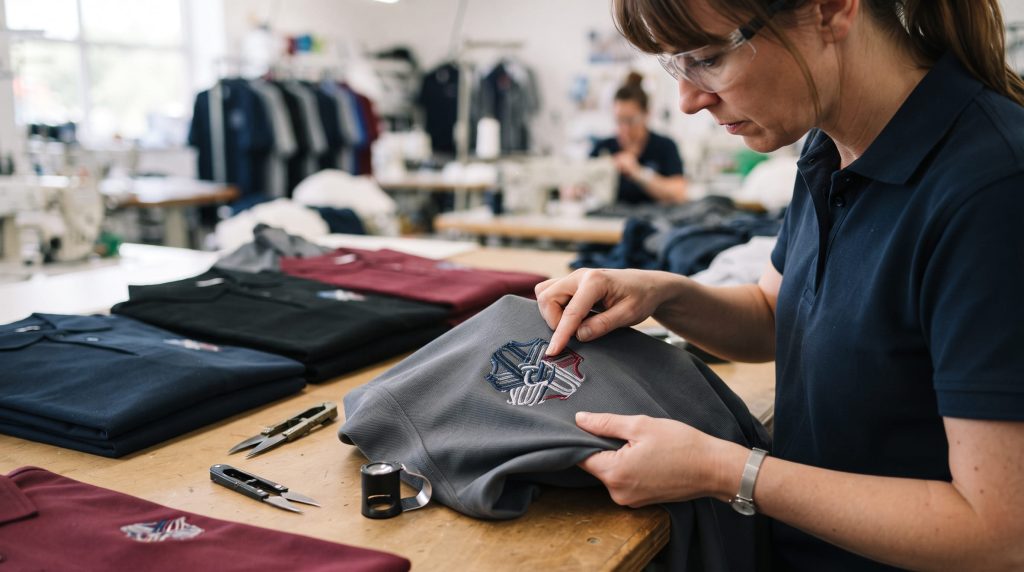
Bulk embroidery uniforms are often a strong choice for polos, shirts, jackets, and other professional garments. However, the right method depends on the fabric, artwork, garment type, expected durability, and budget.
6. Do Not Underestimate Sizing and Color
Sizing can become messy when you are ordering for hundreds of people.
Use one approved size chart and, where possible, collect actual measurements. Never assume that a medium in one market will have exactly the same measurements as a medium somewhere else.
Color needs the same attention.
Provide clear color references and keep an approved production standard. This becomes especially important when you place a repeat order several months later.
For large branded workwear bulk orders, consistency is part of your brand image.
7. Plan Production Before You Need the Uniforms
Large orders need breathing room.
Your procurement timeline may include:
- Product specifications
- Fabric sourcing
- Sampling
- Sample approval
- Bulk production
- Quality inspection
- Finishing and packaging
- Export and delivery
The actual timeline depends on order quantity, customization, fabric availability, production capacity, and shipping arrangements.
If you are importing internationally, start earlier than you think you need to. Shipping delays have a funny habit of appearing at the worst possible time.
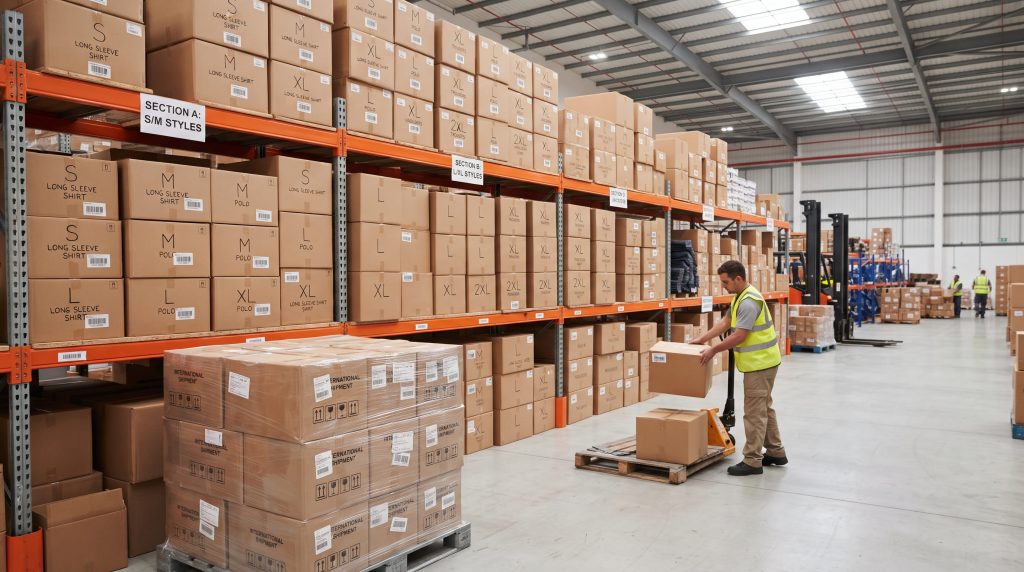
8. Make Your Second Order Easier Than Your First
A good business uniform program should not stop after the first shipment.
Employees leave. New employees join. Offices open. Sizes change. Somehow, someone always needs another medium polo.
Keep records of:
- Approved fabric specifications
- Colors
- Size charts
- Logo artwork
- Garment measurements
- Packaging instructions
- Approved samples
This makes a uniform reorder program for companies much easier to manage and helps keep future batches consistent.
9. Think About the Full Supply Chain
For overseas buyers, sourcing is rarely just about manufacturing.
You may need help with fabric sourcing, production, quality control, finishing, packaging, and export logistics. Managing these steps together can make your procurement process much easier.
VERTEX Supply Networks connects businesses with sourcing, manufacturing, logistics, and international trade support across several industries.
Its apparel capabilities cover custom garment production, fabric sourcing, private label solutions, quality control, finishing, and export logistics.
For more about the company and its wider supply network, visit the VERTEX Supply Networks homepage.

FAQs About Corporate Uniforms Bulk Orders
What is the minimum order quantity for bulk corporate uniforms?
MOQ depends on the garment, fabric, customization, and production requirements. Always confirm the MOQ for each style before placing your order.
How long does production and delivery take for large uniform orders?
The timeline depends on order size, fabric availability, customization, factory capacity, and shipping. Ask your supplier for a complete production and delivery schedule before approval.
Can I get samples before placing a full bulk order?
Yes. A pre-production sample allows you to check the fabric, measurements, color, construction, and branding before committing to the full order.
What customization options are available for corporate uniforms?
Common options include embroidery, printing, custom labels, colors, fabrics, and garment specifications. The best choice depends on the garment and how it will be used.
How do suppliers ensure color and quality consistency across batches?
Approved fabric specifications, color references, measurements, samples, and quality inspections can help maintain consistency. Keeping the original approved specifications is especially useful for repeat orders.
Final Thoughts
Large uniform orders become much easier when you stop treating them as a simple clothing purchase and start treating them as a supply chain project.
Get the fabric right. Approve the sample. Define your sizes and colors. Check branding carefully. Plan production early. Most importantly, think about your next order before the first one even ships.
If you are sourcing corporate uniforms bulk, custom corporate apparel, or branded workwear for international markets, VERTEX Supply Networks can help you coordinate the sourcing and manufacturing process.
Ready to discuss your next order? Contact VERTEX Supply Networks with your apparel specifications, quantities, and sourcing requirements.
