
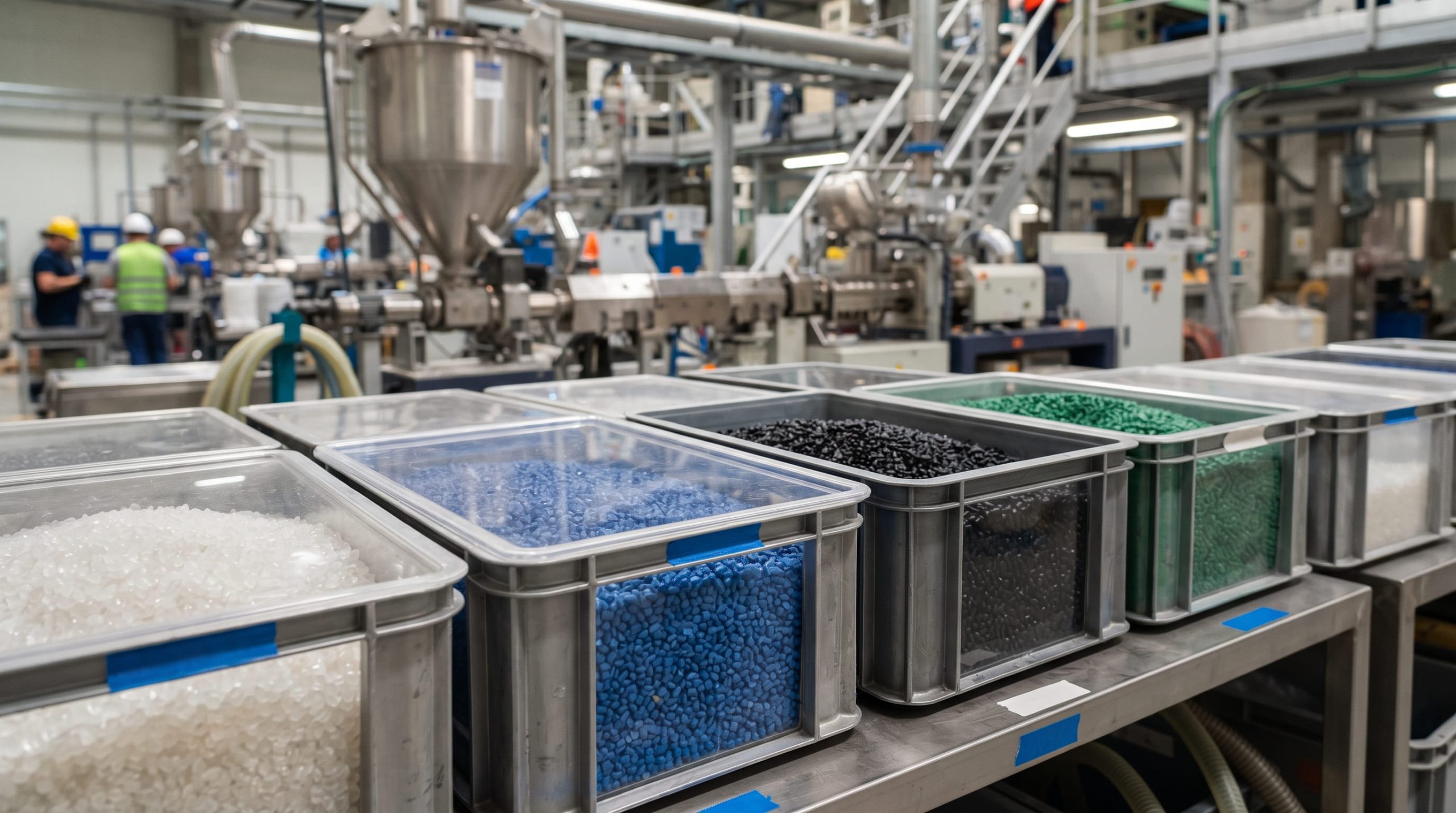

Plastic resins may look like simple pellets, but they are the starting point for countless industrial products. Packaging, pipes, automotive parts, containers, appliance components, films, and many other products can begin with the right polymer material.
For importers, overseas buyers, international distributors, wholesalers, and buying agents, sourcing resin is about more than finding the lowest price. You need the right grade, consistent quality, technical specifications, documentation, packaging, and dependable delivery.
At VERTEX Supply Networks, we help businesses source industrial materials through reliable international supply networks, including polymer and fiber supply solutions.
1. Know the Main Types of Plastic Resins
Before requesting a quotation, understand the basic resin families.
- Polyethylene (PE): Used for films, containers, pipes, tanks, and packaging. HDPE, LDPE, and LLDPE offer different properties.
- Polypropylene (PP): Common in packaging, automotive components, household products, and industrial parts.
- PVC: Widely used for pipes, profiles, cables, flooring, and construction products.
- ABS: Popular for housings, appliances, automotive components, and products requiring good impact strength.
- PET: Common in bottles, packaging, and synthetic fibers.
- Polycarbonate (PC): Selected for applications requiring high impact resistance.
- Nylon or Polyamide (PA): Used for gears, machinery, automotive parts, and components requiring strength and wear resistance.
- Engineering plastics: Materials such as POM, PBT, and PEEK are used when standard plastics cannot meet performance requirements.
The resin family is only the starting point. The exact plastic resin grade matters just as much.
2. Choose the Right Resin Grade
A practical resin selection guide should begin with the finished product, not the supplier’s price list.
Consider:
- Required strength and flexibility
- Operating temperature
- Chemical exposure
- UV or outdoor exposure
- Appearance and color
- Manufacturing process
- Food-contact or other regulatory requirements
- Flame-retardant needs
If you are researching how to choose plastic resin for injection molding, these details are especially important.
Simply asking for “PP resin” is usually not enough. Tell your supplier what you are producing and request a grade that matches your process.
3. Understand Melt Flow Index
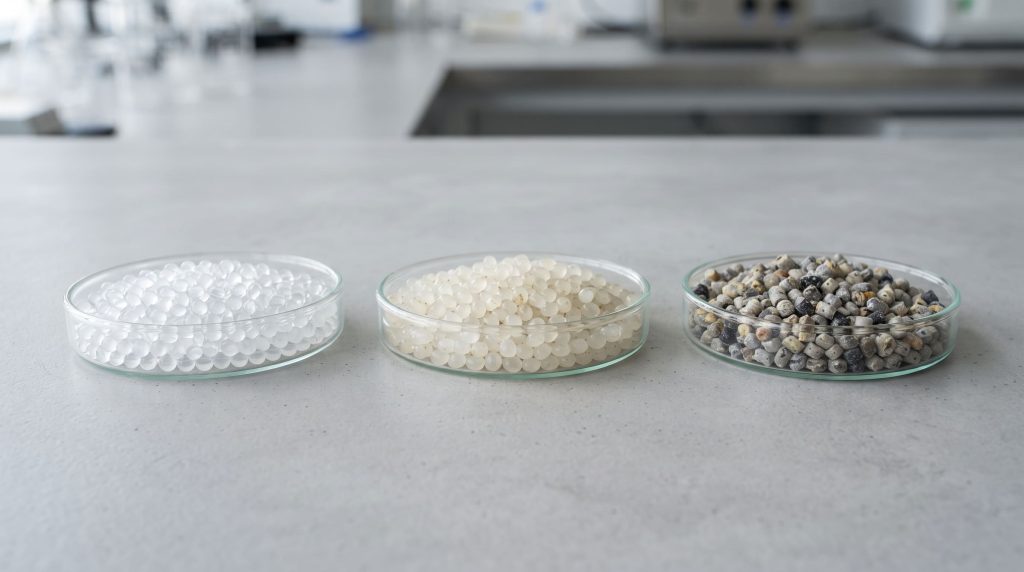
Melt Flow Index, or MFI, indicates how easily molten resin flows under specified testing conditions.
Why should you care? Because the material needs to flow correctly during processing.
When comparing MFI vs density for resin selection, remember that they measure different properties. MFI relates to melt flow behavior, while density measures mass per unit volume.
Always check the values for the exact grade in the supplier’s Technical Data Sheet.
4. Match Resin to Your Manufacturing Process
Different production methods require different grades.
- Injection molding: Common materials include PP, PE, ABS, PC, PA, PET, and engineering plastics.
- Extrusion: PE, PP, PVC, and other suitable grades are used for films, sheets, pipes, and profiles.
- Blow molding: HDPE, PP, PET, and selected specialty grades are used for hollow products.
- Thermoforming: PS, ABS, PET, PP, and other sheet materials can be suitable.
So, if you are looking for the best resin for blow molding containers, do not choose based only on the resin name. Product design, wall thickness, contents, and production conditions also matter.
5. Understand Virgin, PIR, and PCR Resin
Sustainability is becoming an important part of international procurement.
- Virgin resin: Newly produced material, often preferred when consistency is a major priority.
- PIR resin: Post-industrial recycled material recovered from industrial manufacturing waste.
- PCR resin: Post-consumer recycled material recovered from products already used by consumers.
When comparing virgin vs PCR vs PIR resin differences, ask about recycled content, testing, consistency, and certification.
Your choice should depend on product performance, customer requirements, sustainability targets, and destination-market regulations.
6. Check Quality and Compliance Documents
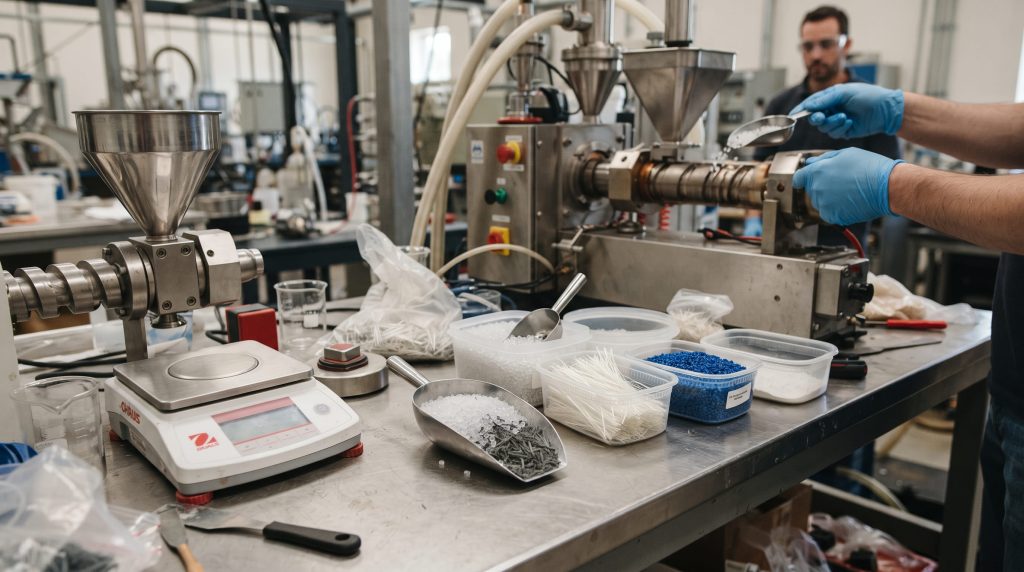
Before placing a bulk order, ask for:
- Technical Data Sheet (TDS)
- Certificate of Analysis (CoA)
- Batch or lot traceability
- Food-contact documentation where applicable
- REACH or RoHS documents where relevant
- UL 94 ratings for applicable flame-retardant grades
- Recycled-content certification where required
For food-related applications, food-grade plastic resin compliance can involve FDA or EU requirements depending on the destination and product.
Never assume that one certification automatically covers every market.
7. Consider Additives and Compounding
The base resin is sometimes only part of the solution.
Common additives and fillers include:
- UV stabilizers
- Flame retardants
- Impact modifiers
- Colorants
- Glass fiber
- Mineral fillers
- Antioxidants
For outdoor products, UV-stabilized plastic resins for outdoor use can provide better resistance to prolonged sunlight.
Glass-filled materials can also improve strength and dimensional stability in demanding applications.
Pre-compounded grades can make production easier because the required additives are already incorporated.

8. Compare Suppliers, Not Just Prices
When several suppliers send quotations, the cheapest option can look attractive. But price alone does not tell you whether the supplier is reliable.
Compare:
- Material consistency
- Exact grade availability
- Quality inspection
- Technical documentation
- Production capacity
- Lead times
- Packaging
- Export documentation
- Logistics support
- Compliance assistance
- Pricing stability
At VERTEX Supply Networks, our Fiber & Polymer Import/Export service supports international buyers sourcing industrial polymers and raw materials.
Explore our Fiber & Polymer Import/Export service and learn more about our fiber and polymer supply solutions.
9. Avoid Common Resin-Sourcing Mistakes
Before confirming your order, make sure you are not:
- Ordering by resin family without specifying the exact grade.
- Ignoring MFI or processing requirements.
- Forgetting drying requirements for nylon, PET, or PC.
- Leaving color, UV, filler, or flame-retardant needs unclear.
- Skipping sample testing.
- Buying without reviewing technical documents.
- Comparing suppliers only by price per kilogram.
A small mistake in a sample order is manageable. The same mistake across several tons can become expensive.
10. Questions to Ask Your Supplier
Before bulk purchasing, ask:
- What exact grade are you supplying?
- What are the MFI and density values?
- Can you provide the current TDS and CoA?
- Is the material virgin, PIR, or PCR?
- What certifications apply?
- Is the grade suitable for my process?
- Can I test a sample before bulk production?
- How will the material be packaged and shipped?
Good questions at the beginning can save you plenty of trouble later.

FAQs About Plastic Resins
What exactly is plastic resin?
Plastic resin is a raw polymer material, usually supplied as pellets or granules, that manufacturers melt and process into finished products.
What are the main types of plastic resins?
Common types include PE, PP, PVC, ABS, PET, PC, PS, and nylon. Engineering plastics are used for more demanding applications.
How do I choose the right resin?
Consider your product requirements, manufacturing process, temperature range, chemical exposure, strength, appearance, and regulatory needs. Then test the appropriate grade.
What is Melt Flow Index?
MFI indicates how easily molten resin flows under specified testing conditions. The suitable value depends on the grade and manufacturing process.
What specifications should I request?
Ask for the exact grade, MFI, density, mechanical properties, HDT, shrinkage, additives, color information, TDS, CoA, and applicable compliance documents.
Final Thoughts: Choose the Right Resin and Supplier
Buying plastic resins is about more than comparing prices.
The right grade can support consistent production, reduce waste, improve product performance, and make international procurement easier. The wrong material can lead to defects, delays, and unnecessary costs.
At VERTEX Supply Networks, we support international buyers with sourcing and supply solutions for industrial materials and polymers.
Planning a bulk polymer purchase? Contact VERTEX to discuss your requirements.
To learn more about our company and supply network, visit About Us.
