
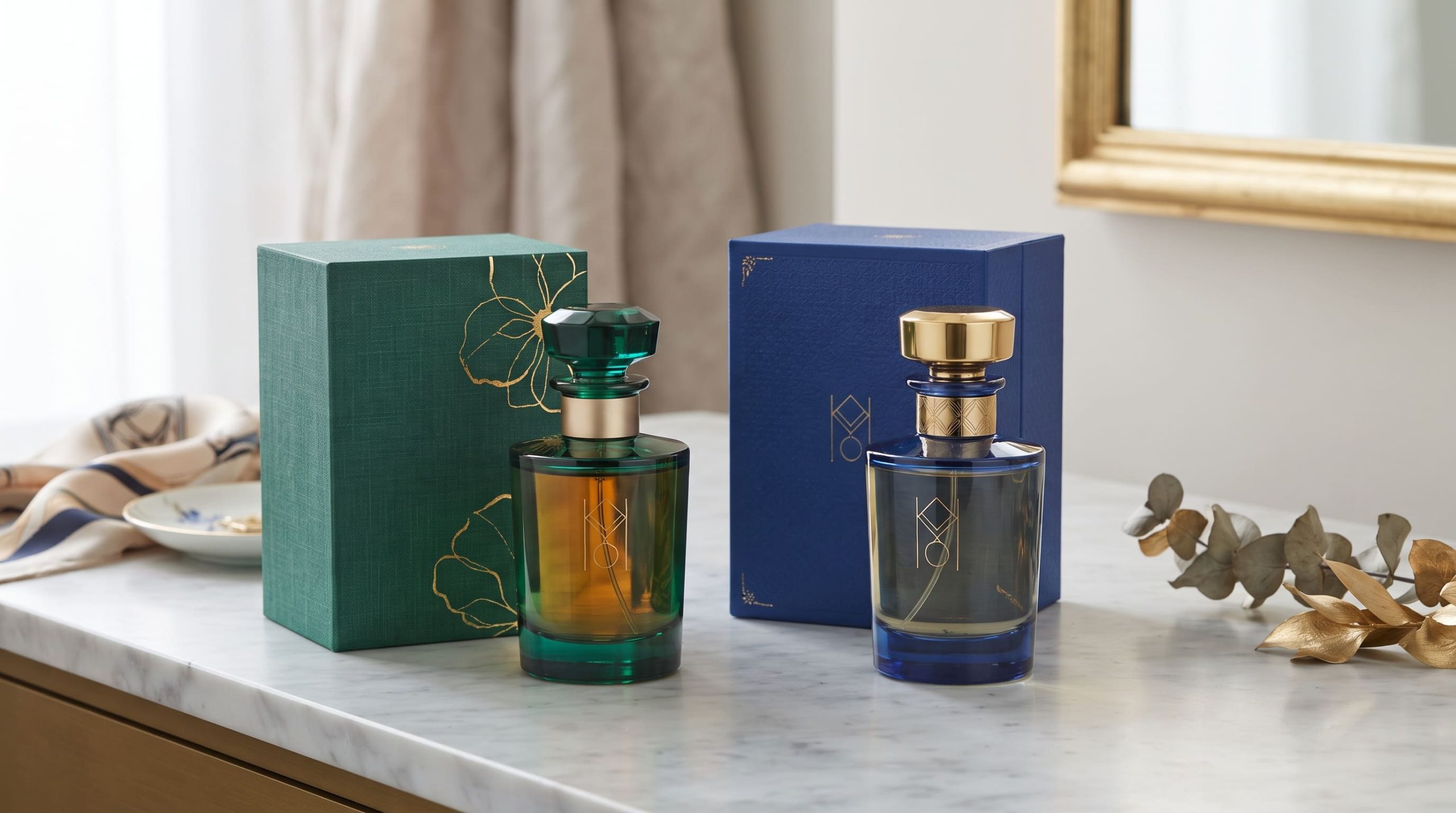

A great perfume might be remembered for its scent, but the perfume packaging design is often what gets someone interested in the first place.
Think about the moment a buyer sees a new fragrance. They have not smelled it yet. They judge the bottle, the box, the colors, the finish, and even how the package feels in their hands.
For importers, overseas buyers, international distributors, wholesalers, and buying agents, this matters even more. Packaging has to look good, protect the fragrance, support the brand, and make commercial sense.
At VERTEX Supply Networks, perfume development covers more than the fragrance itself. The process can include formulation, bottling, branding, packaging, quality control, and support for international distribution.
So, how do you create packaging that people actually want to pick up?
Here are 9 practical perfume packaging design choices worth considering.
1. Start With Your Brand, Not the Box
Before you choose a box, decide what your fragrance should feel like.
Is it luxurious? Modern? Natural? Bold? Traditional?
Your perfume packaging design should answer that question without needing a long explanation.
For example:
- Luxury brands: refined typography, dark colors, rigid structures, and subtle metallic details
- Modern brands: clean layouts, simple fonts, and minimal graphics
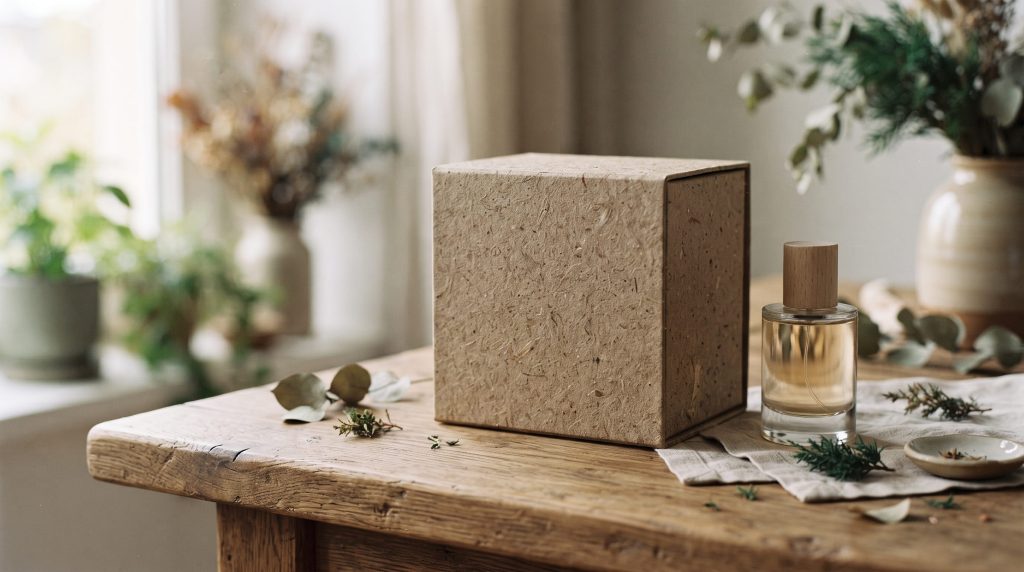
- Natural brands: earthy colors, recycled materials, and organic textures
- Youth-focused brands: bold colors, creative shapes, and playful details
- Heritage brands: classic typography, cultural patterns, and traditional design elements
This is where fragrance brand identity starts to become visible.
Your bottle, box, label, and other brand materials should feel like they belong to the same family.
2. Choose the Right Perfume Box Style
The box you choose can change how customers perceive the product.
A simple folding carton can be practical for larger production runs. A rigid box can make a premium fragrance feel more substantial. A magnetic closure can add another layer to the unboxing experience.
Common options include:
- Folding cartons: Suitable for mass-market and mid-range fragrances
- Rigid perfume boxes: A strong choice for premium positioning
- Magnetic closure boxes: Useful for luxury and gift-focused products
- Drawer boxes: Create a more distinctive opening experience
- Sleeve boxes: Work well with clean and minimalist designs
- Book-style boxes: Suitable for artistic or premium fragrance collections
You do not need the most complicated box available. You need the box that makes sense for your product, price point, audience, and shipping requirements.

3. Make the Perfume Bottle and Box Work Together
Your perfume bottle design and outer packaging should tell the same story.
Imagine opening a beautifully designed black rigid box and finding a bottle that looks completely unrelated. Something feels off.
Your design should consider:
- Bottle shape
- Cap style
- Label
- Logo
- Box dimensions
- Color palette
- Materials
- Finishing details
When these elements work together, the product feels more professional and easier to recognize.
For private-label buyers, this consistency can be especially useful when building a new fragrance range from scratch.
4. Use Finishes Without Overdoing Them
Packaging does not have to sparkle from every angle to look expensive.
Sometimes one well-chosen finish is enough.
Popular tactile finishes for fragrance packaging include:
- Foil stamping
- Embossing
- Debossing
- Spot UV
- Soft-touch coating
- Matte finishing
- Gloss finishing
- Textured paper
A matte rigid box with a small embossed logo can look far more premium than a package covered with too many effects.
There is also a practical side. Finishes need to remain attractive during production, handling, storage, and shipping.
5. Choose Materials That Fit Your Brand
Premium does not always mean using more material.
Many fragrance brands are looking at eco-friendly perfume packaging and more responsible material choices. Options can include recycled cardboard, FSC-certified paper, molded pulp, refill systems, and simpler packaging structures.
The trick is making sustainability feel intentional rather than cheap.
Before selecting materials, ask your supplier about:
- Material specifications
- Recycled content
- FSC certification where applicable
- Printing methods
- Recyclability
- Packaging strength
- Shipping performance
VERTEX also emphasizes responsible sourcing, sustainable practices, transparency, and long-term business relationships as part of its wider supply approach. You can learn more on the VERTEX About Us page.
6. Keep an Eye on Perfume Packaging Trends for 2026
Packaging trends change quickly, but some ideas are becoming more useful for fragrance brands in 2026.
Quiet luxury
Clean typography, restrained colors, subtle textures, and simple structures can create a premium look without excessive decoration.
Refillable systems
Refillable perfume packaging systems can help reduce unnecessary waste while giving customers a reason to purchase refills.
Smart NFC packaging
NFC technology can connect physical packaging with digital experiences such as product information, authenticity features, or brand content.
Tactile textures
Texture gives customers something they can actually feel. That can make a package more memorable, especially in a market where so much product discovery happens online.
Culturally localized design
If you sell internationally, adapting certain visual elements to local preferences can make packaging more relevant while keeping your main brand identity intact.

7. Test Your Packaging Before Mass Production
A packaging design can look perfect on a computer and still have problems in real life.
Before approving a large production order, request prototypes or samples.
Check:
- Bottle fit
- Box strength
- Closure performance
- Print quality
- Color consistency
- Surface finishing
- Drop resistance
- Transport performance
For overseas buyers, this step is especially important. Your packaging may travel through factories, warehouses, containers, ports, distributors, and retailers before reaching the customer.
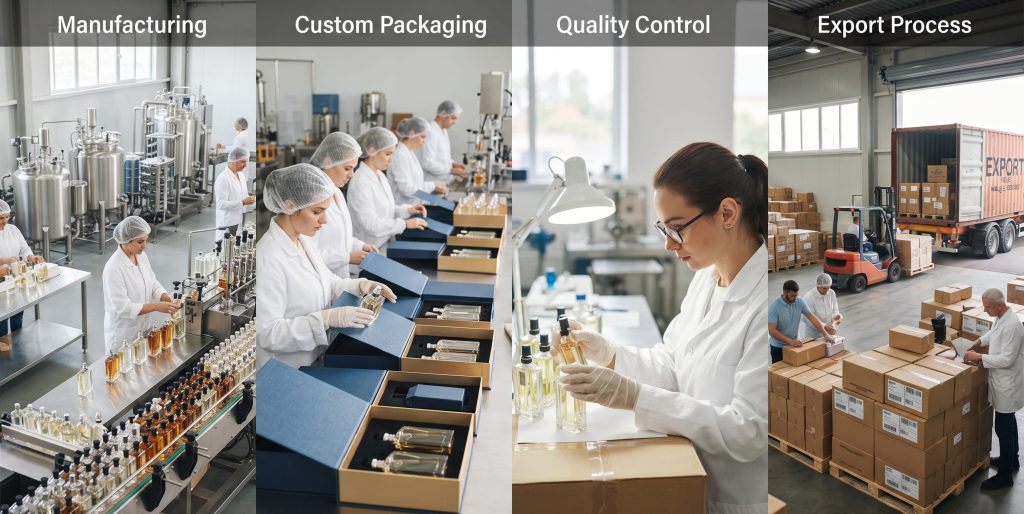
VERTEX’s perfume manufacturing approach includes development, production, quality control, packaging, and distribution support, helping buyers manage the wider process instead of treating packaging as an isolated task.
8. Understand Custom Perfume Packaging Costs
Custom perfume packaging cost can vary significantly depending on materials, dimensions, quantity, printing, finishing, tooling, and structure.
For general planning, the ranges in the supplied brief suggest:
- Basic cartons: Around $0.50 to $1.25 per unit
- Mid-tier rigid boxes: Around $2 to $8 per unit
- High-end custom structures: Around $15 or more per unit
These are only indicative figures, not fixed VERTEX prices. Your final cost will depend on your specifications, MOQ, materials, customization, and shipping requirements.
For B2B purchasing, ask for a quotation that clearly separates sampling, tooling, production, packaging, and delivery costs.
9. Work With a Supplier That Understands the Whole Product
Perfume packaging should not be treated as a separate printing job.
Your supplier should understand the relationship between:
- Fragrance formulation
- Bottle requirements
- Branding
- Labels
- Packaging
- Quality control
- Production quantities
- Target markets
- Export requirements
VERTEX provides perfume formulation, private-label manufacturing, bottle and label branding, packaging development, quality control, and global distribution support through its Perfume & Brand Development service.
Its wider supply network also connects sourcing, manufacturing, packaging, logistics, and international trade support.
FAQs About Perfume Packaging Design
What are the key elements of perfume packaging that influence buying decisions?
Color, typography, materials, box structure, finishes, and overall consistency can influence perceived quality. The design should match the fragrance positioning and target customer.
How do I choose the right box style for my perfume brand?
Consider your price point, target audience, product size, shipping requirements, and desired unboxing experience. Rigid and magnetic closure perfume packaging can suit premium products, while folding cartons can be practical for larger-volume fragrances.
What materials are best for luxury perfume packaging in 2026?
Rigid board, premium paperboard, FSC-certified paper, recycled cardboard, and textured materials can all work well. Your choice should balance appearance, sustainability, cost, and performance.
How can perfume packaging reflect brand identity and story?
Keep your colors, typography, bottle design, materials, textures, and visual details consistent. The packaging should communicate the personality of your fragrance before the customer even opens the box.
What are the latest perfume packaging trends for 2026?
Important trends include quiet luxury, refillable systems, tactile textures, smart NFC packaging, minimalist designs, and culturally localized fragrance packaging.
Final Thoughts
Good perfume packaging does more than protect a bottle.
It creates the first impression, communicates quality, supports your brand identity packaging, and helps customers remember your fragrance.
For importers and international buyers, the best packaging is not necessarily the most expensive. It is the packaging that fits the product, protects it through the supply chain, and makes the brand instantly recognizable.
If you are developing a private-label fragrance, VERTEX can support the wider process from formulation and branding to packaging, manufacturing, quality control, and distribution.
Learn more about Perfume & Brand Manufacturing, explore the VERTEX homepage, or contact the VERTEX team to discuss your fragrance and packaging requirements.
