

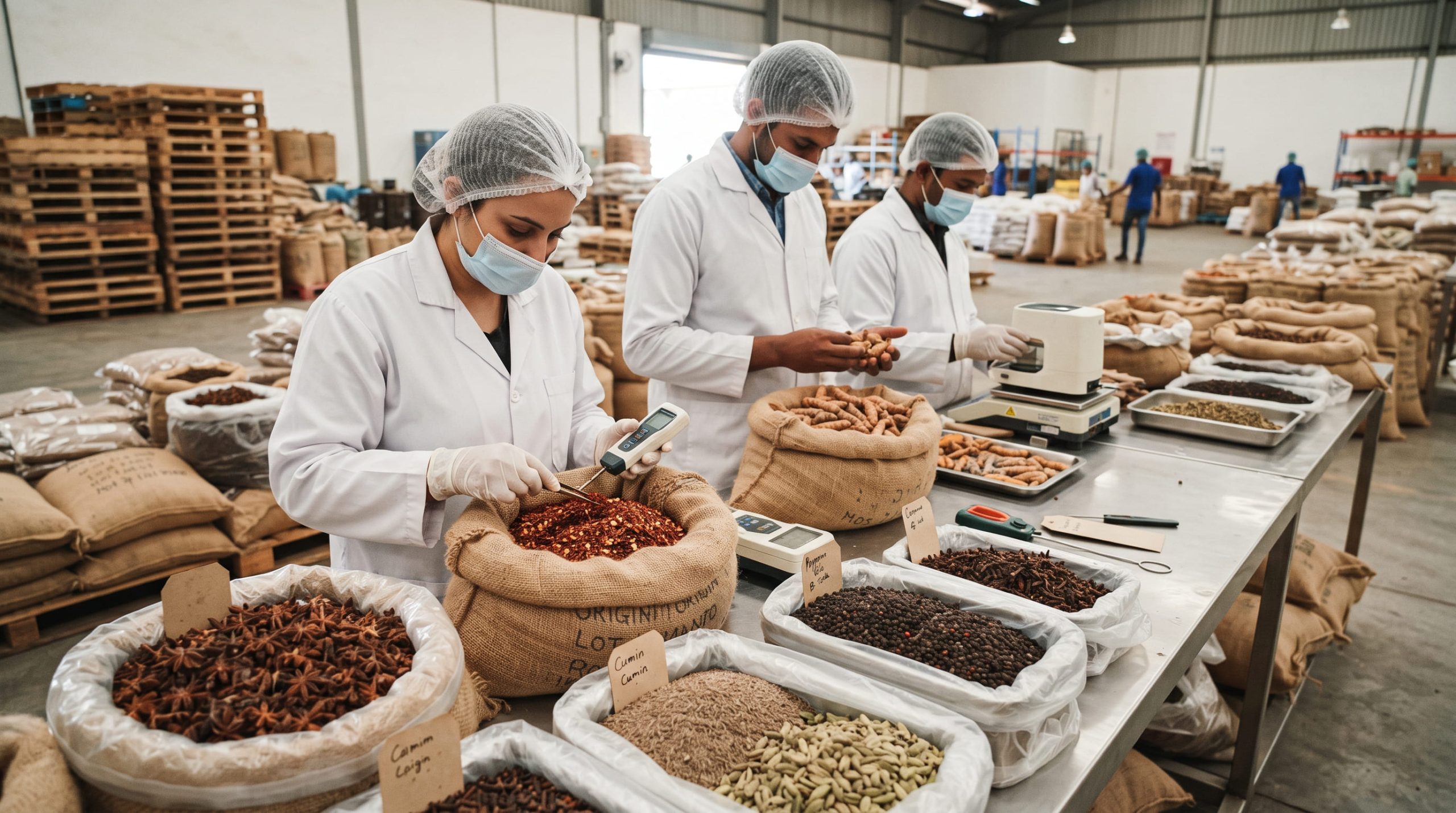

When you buy spices in bulk, bulk spice moisture control may not be the first thing you check. You probably look at color, aroma, origin, price, packaging, and delivery. All of these matter, but moisture can quietly create problems after a shipment leaves the supplier.
A spice shipment may look perfect at loading and still develop caking, condensation, aroma loss, or other quality issues during storage or ocean transport.
For importers, overseas buyers, distributors, wholesalers, and buying agents, controlling moisture is an important part of protecting product quality and shelf life.
At VERTEX Supply Networks, quality, sourcing, packaging, and export coordination work together to support reliable bulk spice supply for international buyers.
1. Why Moisture Matters in Bulk Spices
Moisture content in spices affects much more than a laboratory number.
Poor control can contribute to:
- Mold and yeast growth
- Caking in powdered spices
- Aroma and volatile oil loss
- Color changes
- Shorter shelf life
- Container condensation
- Packaging problems
- Increased shipment weight without equivalent dry solids
- Potential claims or rejection
This is why bulk spice quality control should begin before loading.
2. Moisture Content vs. Water Activity
These terms are related, but they are not the same.
Moisture content tells you how much water and volatile material is present.
Water activity, or aw, tells you how available that water is for microbial growth and certain chemical reactions.
In simple terms, moisture content tells you how much water is there, while water activity tells you how available that water is.
Many dried spices may fall roughly within an aw range of 0.30 to 0.60, but there is no universal value for every spice. The right specification depends on the product, processing, packaging, storage, and shelf-life requirements.
3. There Is No Single Moisture Limit for Every Spice
Turmeric is not cumin. Cumin is not black pepper. Ground chilli is not whole peppercorns.
The moisture limit for bulk spices should depend on the specific commodity and its intended use.
Your buying specification should state:
- Exact spice and grade
- Whole, cracked, or ground form
- Maximum moisture level
- Water activity requirement where applicable
- Test method
- Sampling procedure
- Packaging requirements
- Storage and transportation conditions
“Premium quality” sounds good, but a clear specification is much more useful.

4. Spice Moisture Testing Starts With Good Sampling
Even good laboratory equipment cannot produce a useful result from a poor sample.
For reliable bulk spice moisture control, sampling and spice moisture testing should represent the shipment as reasonably as possible. Depending on the inspection plan, this can involve multiple bags, pallets, locations, and depth levels.
ISO 939:2021 specifies an entrainment method for determining moisture content in spices and condiments. Rapid moisture analyzers can also be useful for routine checks when properly validated against the agreed reference method.
Ask your supplier:
“Which test method do you use, and how do you verify the result?”
It is a simple question that can reveal a lot about a supplier’s quality process.
5. Grinding Makes Moisture Control More Important
Grinding increases the exposed surface area of a spice. That can make ground products more vulnerable to humidity.
Possible problems include:
- Moisture absorption
- Caking
- Oxidation
- Aroma loss
- Color changes
This is why whole spices versus ground spices shelf life should be considered when setting specifications.
If you are importing ground turmeric, chilli, cumin, or another powder, discuss moisture requirements and packaging with your supplier before production.

6. Choose Moisture Barrier Packaging Carefully
Packaging helps slow moisture movement, but it cannot dry an already wet product.
Depending on the product and shipment requirements, packaging may include:
- Food-grade PP or woven bags with HDPE liners
- Multiwall paper sacks with polyethylene liners
- High-barrier laminated packaging
- Aluminum foil laminate structures
- Bulk bags with moisture-barrier liners
The best packaging depends on the spice, quantity, destination, storage period, and shipping conditions.
VERTEX also supports packaging and private-label requirements as part of its wider sourcing and export services.
7. Warehouse Humidity Can Change Product Quality
A spice can leave processing in good condition and still face moisture problems later.
Good bulk spice storage should protect products from:
- Direct floor contact
- Water leaks and rain
- Excess humidity
- Condensation
- Direct sunlight
- Pests
- Strong odors
Palletized storage, clean handling, ventilation, and humidity monitoring can help reduce avoidable risks.
Learn more about VERTEX and its sourcing approach on the About Us page.

8. Check More Than the Certificate of Analysis
A bulk spice certificate of analysis is useful, but it should not be your only quality check.
Before approving a shipment, ask for:
- Moisture result and test method
- Water activity result where required
- Sampling information
- Batch or lot identification
- Packaging specification
- Microbiological results where relevant
- Mycotoxin results where relevant
- Pesticide or contaminant documentation where required
- Product specification
- Traceability information
Also ask how failed batches are handled. A supplier’s corrective-action process can tell you a lot about its quality culture.
9. Is Lower Moisture Always Better?
No.
Over-drying can affect aroma, color, texture, volatile oils, and economic yield.
The goal is not to make the spice as dry as possible. The goal is to achieve a controlled moisture level that supports safety, stability, sensory quality, and shelf life.
That is the smarter approach to spice quality standards.

10. Ask Your Supplier One Better Question
Instead of asking only:
“What is the moisture percentage?”
Ask:
“How do you control moisture from sourcing to loading?”
That question helps you understand how bulk spice moisture control is managed through drying, testing, storage, packaging, sampling, and shipment preparation.
For international buyers, this matters because spices may spend weeks in transportation before reaching the destination warehouse.
Frequently Asked Questions
Why is moisture control important in bulk spices?
Moisture affects shelf life, aroma, color, flowability, microbial stability, and packaging performance. Poor control can contribute to caking, spoilage, condensation, and quality claims.
What problems can excessive moisture cause?
Excess moisture may contribute to mold and yeast growth, caking, aroma loss, discoloration, shorter shelf life, condensation, and shipment problems.
What is the difference between moisture content and water activity?
Moisture content measures the amount of water and volatile material present. Water activity measures how available that water is for microbial growth and chemical reactions.
Which test method is used for spice moisture?
ISO 939:2021 specifies an entrainment method for determining moisture content in spices and condiments. Buyers should agree with suppliers on the applicable test method before shipment.
Should buyers specify moisture percentage or water activity?
Where appropriate, both can be useful. Moisture percentage helps assess product composition and commercial yield, while water activity provides additional information about stability and microbial risk.
Conclusion
A spice shipment can look perfect on loading day and still have a moisture problem waiting inside the bags.
That is why bulk spice moisture control should be part of your purchasing specification, quality checks, packaging discussions, and supplier evaluation.
From sourcing to processing, packaging, and export, every stage matters.
VERTEX Supply Networks supports international buyers with agricultural sourcing, quality requirements, packaging, and export coordination.
If you are planning your next bulk spice order, contact VERTEX to discuss your product, packaging, and supply requirements.
You can also explore VERTEX’s Spices Supply content for more information about its spice sourcing and supply capabilities.
