

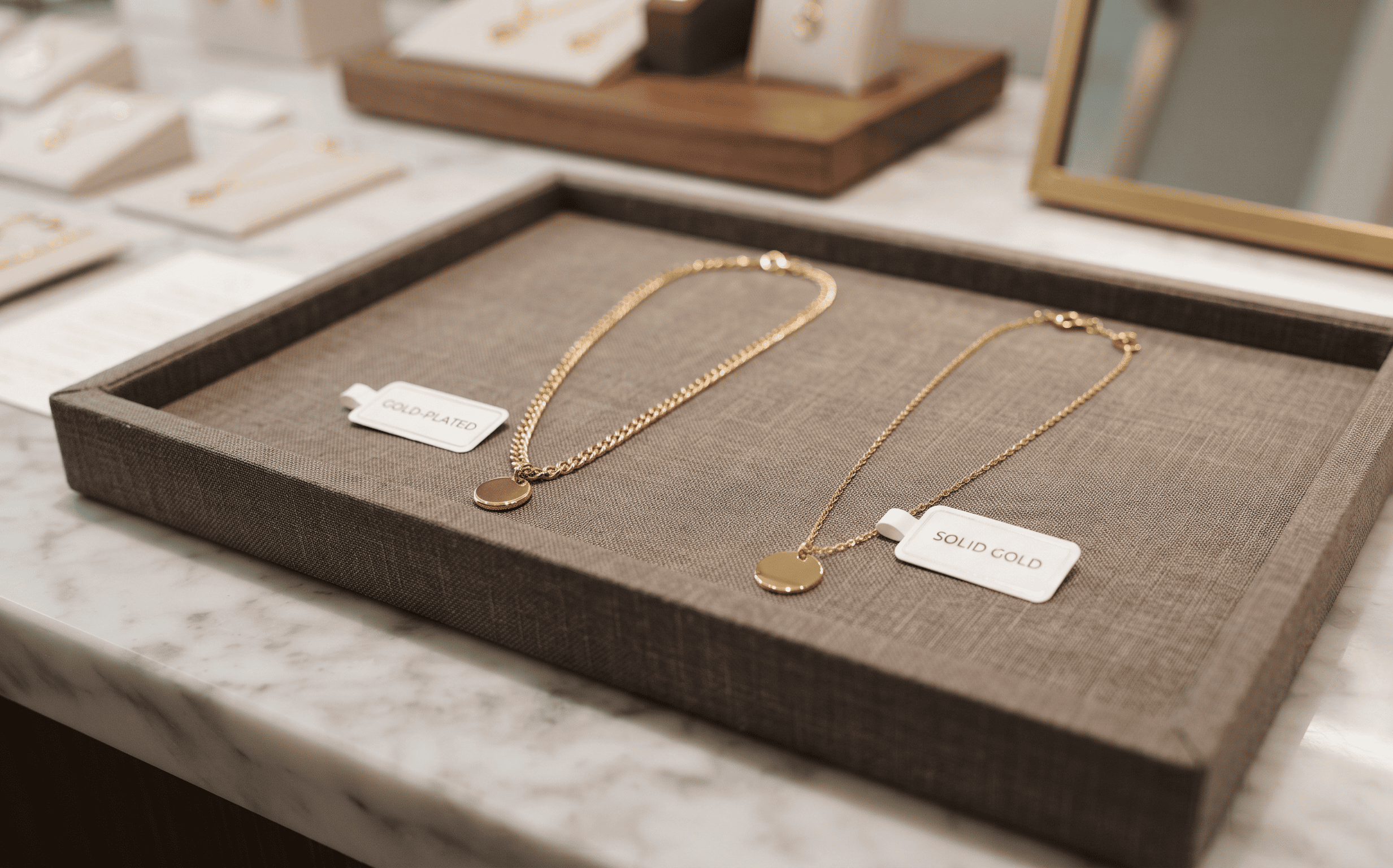

If you have ever compared different types of gold jewelry, you may have noticed something interesting: many pieces can look almost identical at first glance. This gold jewelry comparison explains the differences between gold-plated, solid gold, vermeil, and gold-filled options so retailers can make smarter bulk buying decisions.
For importers, overseas buyers, international distributors, and boutique owners, selecting the right jewelry type can directly affect profit margins, customer satisfaction, and inventory performance. The right choice can help businesses build stronger collections, while the wrong option may result in complaints, returns, and slow-moving stock.
At VERTEX, we help businesses source jewelry solutions based on their market requirements, pricing goals, and customer expectations. Instead of asking which material is simply better, retailers should focus on which option matches their business model.
Let’s explore the differences in detail.
1. Gold Jewelry Comparison: Gold-Plated vs Solid Gold Jewelry
Gold-plated jewelry starts with a base metal such as brass, copper, stainless steel, or silver. A thin layer of gold is applied over the surface to create the final appearance.
Solid gold jewelry is made entirely from gold, meaning the material runs throughout the complete piece. This construction makes it more expensive while offering better durability and long-term value.
Key differences:
- Solid gold contains gold throughout the entire piece.
- Plated designs offer a more affordable option for trend-focused collections.
- The durability and value of solid gold make it suitable for long-term wear.
- Many boutiques choose plated pieces for seasonal collections and fashion trends.
- Luxury buyers often prefer solid gold because of its lasting appeal.
For gold plated jewelry wholesale, the thickness of the gold coating is usually measured in microns. A thicker layer generally provides better resistance against daily wear.
2. How Long Does Gold Plating Last?
This is one of the most common questions retailers ask.
How long does gold plating last on necklaces?
In real-world use:
- Occasional wear: about 2 to 5 years
- Regular weekly wear: about 1 to 3 years
- Daily wear: around 6 to 18 months
Sweat, perfume, water, and constant friction can gradually affect the gold surface.
This is why many boutiques position plated jewelry as a stylish fashion accessory rather than a lifetime investment piece.

3. Is Gold-Plated Jewelry Good for Everyday Wear?
Yes, it can be suitable for everyday wear, but customer expectations should be realistic.
If shoppers enjoy changing accessories based on trends, seasons, and outfits, plated jewelry can be an excellent choice.
Benefits for boutiques:
- Requires less upfront investment
- Helps maintain faster inventory turnover
- Allows easier seasonal collection updates
- Creates stronger retail margin opportunities
For customers who want one necklace to wear every day for many years, solid gold bulk purchase retailers usually see better long-term satisfaction.
4. Gold Vermeil vs Gold Plated
Although gold vermeil and gold-plated jewelry can appear similar, their materials and construction methods are different.
A vermeil piece uses sterling silver as the base metal and usually includes a thicker gold coating. This creates a more premium appearance and positions it between standard plating and solid gold.
Plated jewelry can use different base metals depending on the design requirements. The gold layer may be thinner, but the lower cost makes it attractive for retailers managing fashion-focused collections.
Many retailers choose gold vermeil wholesale suppliers when they want a premium look without the full cost of solid gold.
5. What About Bulk Pricing and Margins?
Here is the simple version:
- Gold-plated jewelry: lower cost and higher markup potential
- Gold vermeil: mid-range pricing with premium positioning
- Solid gold jewelry: higher cost with lower percentage margins but higher average order values
This gold jewelry comparison helps retailers understand why different materials serve different markets. Cost comparison between gold plated and solid gold per unit can influence purchasing decisions, margins, and inventory planning.
While plated jewelry often supports faster-moving collections, solid gold can generate stronger customer loyalty and fewer returns.
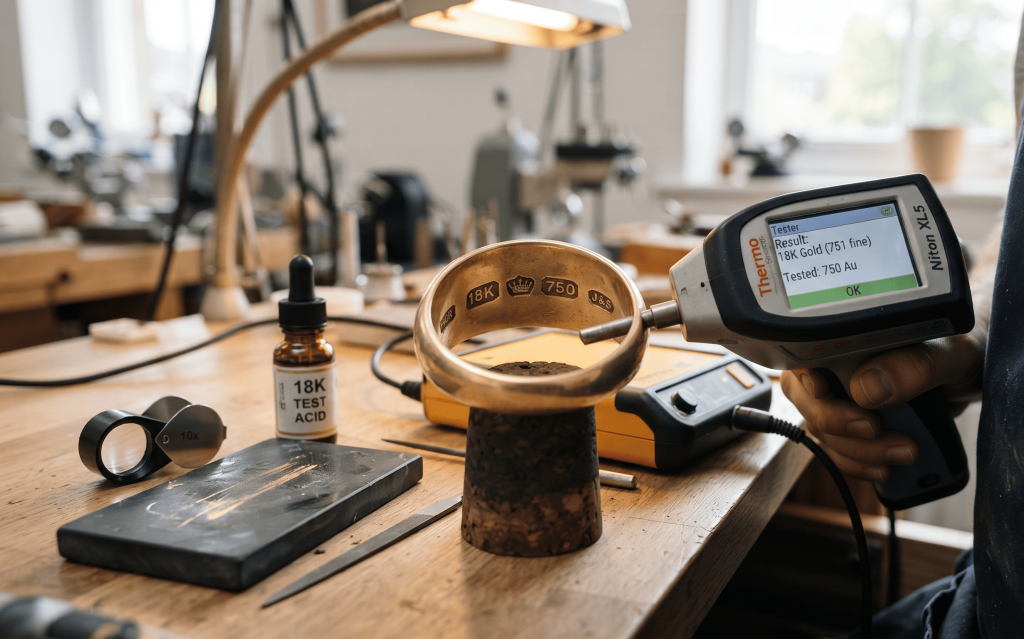
6. How Can Retailers Tell if Jewelry Is Solid Gold?
How to test solid gold vs plated in store:
- Check for hallmarks such as 10K, 14K, 18K, or 22K.
- Compare weight because solid gold is usually heavier.
- Look for worn areas that reveal another metal underneath.
- Use a magnet test because gold is non-magnetic.
- For large orders, professional XRF testing is the safest option.
7. Which Option Is Better for Sensitive Skin?
Hypoallergenic solid gold jewelry for sensitive skin is generally the safest choice.
Best metal allergy friendly jewelry for shops:
- Best: 14K or 18K solid gold
- Good: Gold vermeil over sterling silver
- Variable: Gold-plated brass or copper
If your boutique serves customers with sensitive skin, avoiding nickel-containing base metals is a smart move.
8. Care Instructions and Return Policies
Gold plating care instructions for customers:
- Remove jewelry before showering or swimming.
- Avoid direct contact with perfume and lotions.
- Store pieces in a soft pouch.
- Wipe with a dry cloth after wearing.
Suggested boutique policies:
- Gold plated: 30 to 90 day warranty
- Gold vermeil: 6 to 12 month warranty
- Solid gold: 1 to 5 year warranty
Clear care instructions can reduce returns and improve customer satisfaction.

9. Can Gold-Plated Jewelry Be Replated?
Yes, many retailers do it for their best-selling designs.
Replating service cost for retailers is usually around $5 to $20 per piece, depending on size and plating thickness.
Replating is often worthwhile for:
- Popular collections
- Premium boutique lines
- Customer repair programs
For very low-cost fashion items, replacing the piece is usually cheaper than refurbishing it.
10. How Should Boutiques Describe Plated Jewelry?
How to describe plated jewelry in product listings:
Instead of writing “gold necklace”, be specific.
Better example:
“18K gold-plated brass necklace with a 1-micron gold layer.”
Honest labeling builds trust and reduces misunderstandings.
When Is Gold-Filled a Better Choice?
Gold-filled jewelry becomes interesting when customers want better durability than standard plating without paying solid gold prices.
Bulk gold filled jewelry suppliers for boutiques are often a good fit for:
- Mid-range jewelry stores
- Resort boutiques
- Gift shops
- Everyday wear collections

Quick Gold Jewelry Comparison Guide for Retailers
Gold-plated jewelry works best for:
- Trend-focused collections
- Fast inventory turnover
- Lower upfront investment
- Higher markup potential
Gold vermeil works well for:
- Premium affordable collections
- Better durability than standard plating
- Higher perceived value
Gold-filled jewelry makes sense for:
- Longer-lasting everyday wear
- Mid-range pricing
- Better durability without solid gold pricing
Solid gold remains the best option for:
- Luxury positioning
- Customers with sensitive skin
- Strong resale value
- Long-term customer satisfaction
Final Thoughts
This gold jewelry comparison shows that choosing between gold plated and solid gold jewelry is not just a product decision. It is a business decision.
If your store focuses on fast-moving fashion trends, gold plated jewelry wholesale can deliver excellent margins and flexible inventory management. If your customers value durability, resale potential, and long-term wear, solid gold bulk purchase retailers often benefit from stronger customer trust and fewer returns.
At Vertex Supply Networks, we help importers, overseas wholesalers, distributors, and boutiques source jewelry collections that match their target market, pricing goals, and quality expectations. Many successful retailers use a balanced mix of plated, vermeil, gold-filled, and solid gold pieces to maximize sales and customer satisfaction.
Need support with bulk jewelry sourcing or private label production? Connect with VERTEX to discuss a customized sourcing solution for your retail market.
Contact VERTEX Supply Networks
📞 Phone: +92 337 9233693
📧 Email: vertexsupplynetworks@gmail.com
